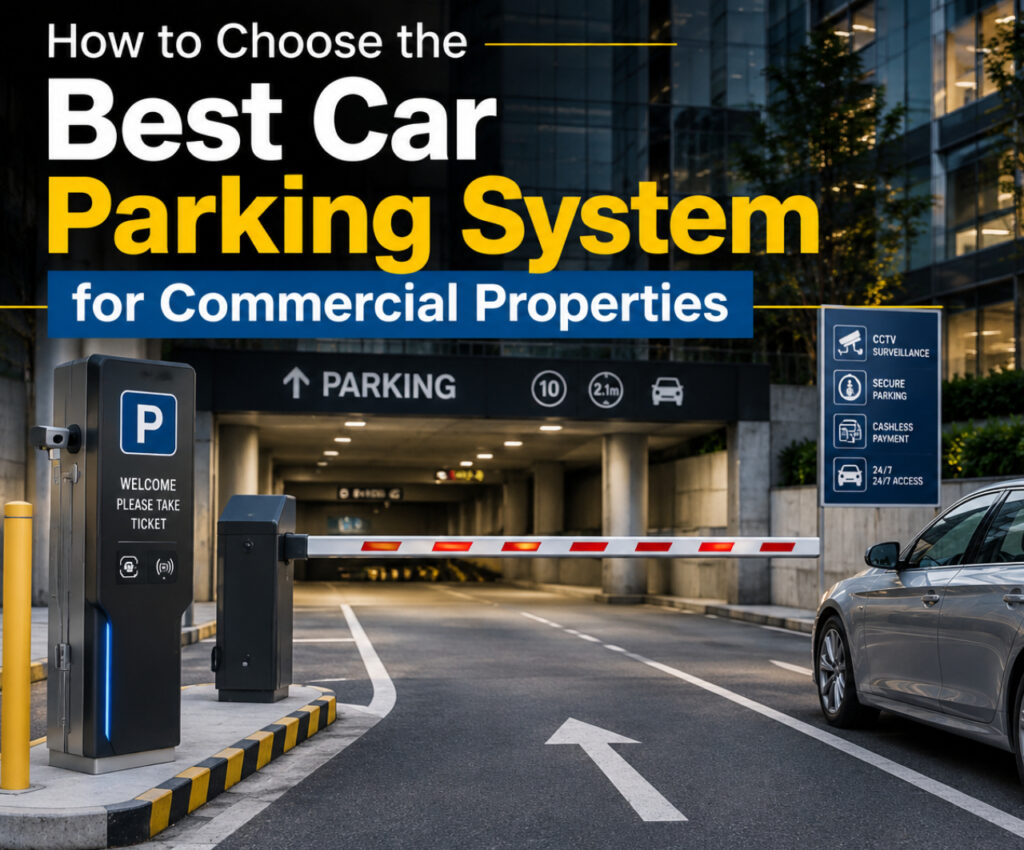
1. Why Evaluating the Core Needs of Commercial Properties Matters
The complexity of modern commercial real estate demands a highly strategic approach to infrastructure development, particularly concerning vehicle storage. A standard, off-the-shelf solution rarely addresses the unique geometrical and operational constraints of large-scale facilities. Recent 2025 industry data indicates that urban commercial properties face a thirty percent increase in vehicle turnover compared to the previous decade, necessitating a much more rigorous initial assessment phase. Understanding the precise architectural and operational parameters is the foundational step in selecting an best car parking system.
Wholesale buyers and property developers must prioritize these foundational assessments before committing to a massive capital expenditure. Different commercial sectors, such as premium retail centers versus corporate office parks, inherently require drastically different traffic flows and user experiences. Customization at the manufacturing level allows developers to tailor the physical footprint and software interfaces to match these precise sector requirements. Engaging with wholesale manufacturers early in the planning stage ensures that the resulting infrastructure aligns perfectly with the developer’s vision.
Overlooking these critical facility needs inevitably leads to poor user experiences, manifested by severe bottlenecks and prolonged wait times. These operational failures directly impact the bottom line of B2B stakeholders, as frustrated drivers may abandon the facility in favor of competitors. Furthermore, inefficient parking layouts waste valuable commercial real estate square footage, translating directly into lost potential rental income. A poorly planned facility becomes a structural liability rather than a revenue-generating asset.
Conducting a comprehensive site analysis guarantees that the selected infrastructure can adapt to projected growth trajectories. As commercial hubs expand their tenant rosters leading into 2026, the underlying parking infrastructure must be capable of absorbing increased capacity without requiring complete structural overhauls. A thorough evaluation protects the initial investment and secures the long-term operational viability of the commercial property.
1.1. How Space Limitations Drive the Demand for Custom Solutions
Urban land scarcity is forcing commercial developers to completely rethink traditional parallel and angled parking layouts. A conventional car parking system often fails to utilize every available cubic meter of commercial space, leaving voids that cannot be monetized. This spatial inefficiency is no longer acceptable in high-density metropolitan areas where every square foot of real estate comes at a premium.
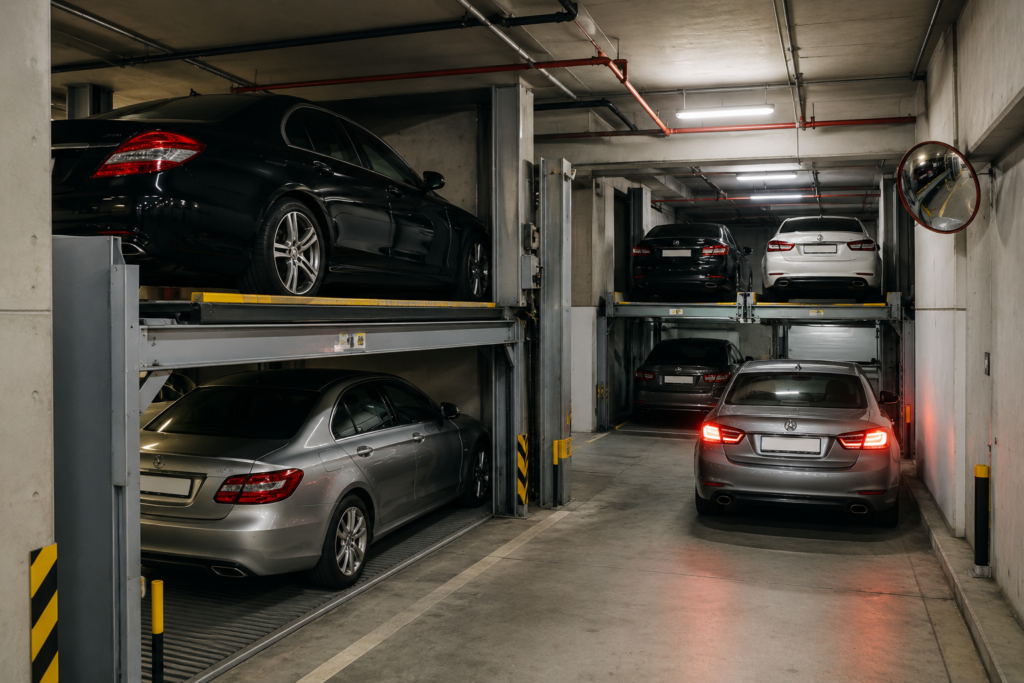
This severe spatial constraint is the primary catalyst driving the demand for bespoke engineering and wholesale customization. Manufacturers are increasingly shifting away from standardized models to design tailored car parking system configurations that fit seamlessly into irregular architectural footprints. By customizing the steel framework and mechanical alignments, engineers can navigate around existing structural pillars, utility shafts, and irregular basement geometries.
Custom car parking system solutions empower developers to double or even triple their parking capacity without expanding the building’s external footprint. This level of spatial optimization is achieved by minimizing the driving aisles and pedestrian walkways required in traditional setups. The resulting high-density car parking system layout maximizes the revenue potential of the commercial property while maintaining strict adherence to safety and building codes.
By engaging directly with wholesale manufacturers who offer flexible design parameters, commercial property owners can transform previously unusable spatial voids into highly profitable parking assets. This collaborative engineering approach ensures that the physical limitations of the site do not compromise the overall capacity or functionality of the final installation.
1.2. Why High Traffic Volumes Require Scalable Infrastructure
Commercial properties experience highly fluctuating traffic patterns, with morning and evening rush hours causing severe congestion if the infrastructure is not adequately scaled. A rigid, static car parking system quickly becomes a massive operational liability during these peak utilization windows. The car parking system must be engineered to absorb sudden, massive surges in vehicle volume without gridlocking the surrounding city streets.
Implementing a car parking system with smart technology addresses this exact challenge by providing the dynamic scalability needed to manage fluctuating demand. Early 2025 industry statistics reveal that scalable, sensor-driven parking solutions reduce peak-hour entry queue times by up to forty percent. This operational fluidity is achieved through automated barrier control, dynamic LED guidance, and pre-booking algorithms that spread the arrival load.
Wholesale buyers must actively seek out modular hardware systems that can be expanded incrementally as tenant occupancy grows over time. This phased approach to scaling prevents massive upfront capital expenditures while simultaneously future-proofing the property against unforeseen demand spikes. Modular entry and exit terminals can be added to the car parking system infrastructure with minimal disruption to ongoing commercial operations.
A highly scalable infrastructure ensures that the commercial facility maintains a premium, frictionless user experience even on the busiest days. This reliability is crucial for retaining high-value corporate tenants who prioritize operational efficiency and convenience for their employees and visiting clients.
1.3. Which Operational Bottlenecks Impact Long-Term ROI
Unidentified operational bottlenecks, such as slow ticketing kiosks, confusing wayfinding, and poorly designed exit plazas, silently erode the profitability of a commercial parking facility. These points of friction cause significant driver frustration, leading to decreased utilization rates as users seek out alternative facilities. Over time, these minor inefficiencies compound into substantial revenue losses.
Identifying these specific pain points requires a deep, analytical dive into user journey mapping long before selecting a car parking system. Customization allows developers to engineer precise car parking system solutions that target and eliminate these exact bottlenecks. For example, implementing a customized car parking system with high-speed RFID readers can entirely remove the delay associated with manual ticket extraction and payment processing.
For wholesale distributors and bulk buyers, offering a reliable car parking system that guarantees smooth, uninterrupted throughput translates directly to higher recurring revenue for their end clients. Removing physical and digital barriers to entry and exit keeps the vehicle turnover rate optimized, ensuring the maximum number of transactions per available parking space per day.
Addressing these operational hurdles proactively during the procurement phase guarantees a significantly stronger long-term return on investment. It sets a rock-solid operational foundation that will support the intense utilization demands expected of premium commercial properties in 2026 and beyond.
2. How a Smart Parking System Transforms Commercial Real Estate
The integration of advanced digital technology into physical parking infrastructure has fundamentally altered the value proposition of commercial real estate. A smart parking system is no longer viewed as a luxury amenity but as a baseline expectation for modern Class A office buildings and premium retail centers. This technological shift elevates the entire profile of the building, positioning it as a modern, forward-thinking asset.
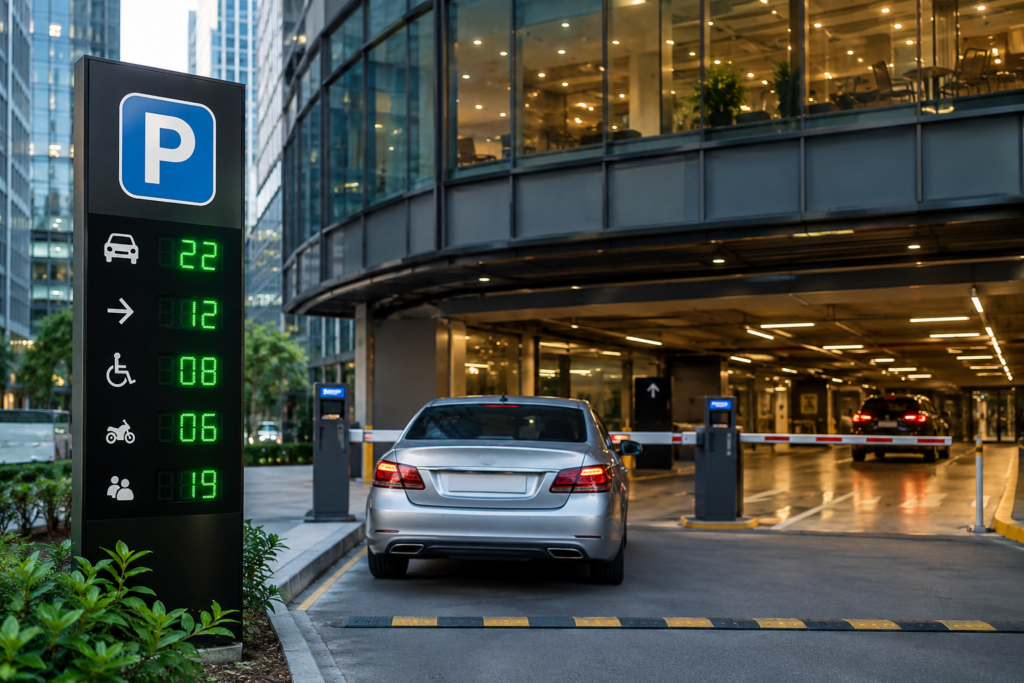
This transformation is heavily driven by the modern corporate tenant’s demand for seamless connectivity between the vehicle, the driver, and the building management team. The operational emphasis has shifted from merely providing a secure space to store a vehicle to delivering a holistic, tech-enabled user journey. Tenants actively seek out buildings where parking is frictionless, cashless, and digitally integrated.
For B2B buyers and wholesale procurement teams, this means sourcing from manufacturers who possess robust software development capabilities alongside their traditional hardware manufacturing expertise. Custom APIs, white-label mobile applications, and integrated cloud dashboards are now primary deciding factors in bulk procurement contracts. The software ecosystem is just as critical as the physical steel structure.
The ultimate result is a highly digitized commercial asset that commands higher rental premiums and operates with maximum energy and operational efficiency. This technological integration perfectly aligns with the intelligent building standards and sustainability metrics that institutional investors are aggressively targeting in 2025.
2.1. Why Real-Time Data Analytics Improve Facility Management
Access to real-time data analytics empowers commercial facility managers to make proactive, revenue-optimizing decisions rather than reacting to problems after they occur. A sophisticated smart parking system continuously harvests granular data on space occupancy rates, peak usage times, average dwell durations, and entry/exit velocities. This constant stream of intelligence transforms facility management from a reactive chore into a strategic function.
This data allows property managers to implement highly profitable dynamic pricing models, adjusting rates automatically based on real-time supply and demand. During high-demand periods, pricing can be optimized to maximize revenue, while discounted off-peak rates can attract otherwise lost traffic. Custom dashboards provided by wholesale manufacturers make this complex data easily actionable for on-site managers.
Furthermore, predictive maintenance algorithms generated by the system’s sensors minimize costly downtime by flagging hardware anomalies before they cause catastrophic failures. If a barrier arm motor begins drawing excess current, the system alerts technicians to perform maintenance during off-peak hours. This predictive approach drastically reduces lifecycle maintenance costs and prevents revenue loss from out-of-service lanes.
Leveraging these advanced analytics effectively transforms the parking facility from a passive, sunk cost into an active, data-driven revenue center. This strategic shift is a crucial differentiator for investors analyzing the performance metrics of commercial real estate portfolios heading into 2026.
2.2. How Integration with Existing Building Management Systems Works
A standalone parking solution creates isolated data silos that hinder the overall operational efficiency and sustainability of a commercial property. True operational synergy is achieved only when the smart parking system communicates bidirectionally with the property’s existing Building Management System (BMS). This integration merges the parking ecosystem into the central nervous system of the building.
This interconnectedness allows for highly efficient, automated control of environmental systems based on real-time parking occupancy. For instance, the BMS can automatically reduce ventilation rates and dim lighting in enclosed parking levels when the sensors indicate those areas are empty. This dynamic environmental control yields massive energy savings and significantly lowers the building’s carbon footprint.
Wholesale buyers must aggressively prioritize suppliers who offer open-protocol hardware and custom integration services. Proprietary, closed-loop systems often require expensive, complicated middleware workarounds to sync with modern, IoT-enabled BMS platforms. Sourcing equipment that natively supports standard building protocols ensures a smooth, cost-effective integration process.
Seamless integration creates a cohesive, intelligent building ecosystem that operates at peak efficiency. This unified approach significantly boosts the commercial asset’s marketability, LEED certification potential, and overall attractiveness to eco-conscious corporate tenants in an increasingly regulated 2025 market.
2.3. Which Custom Software Features Attract Wholesale Buyers
Wholesale buyers and large-scale property developers evaluate parking systems based heavily on the availability of highly specific, customizable software capabilities. White-labeling is a major draw in the B2B sector, allowing operators to brand the user-facing mobile parking app and physical kiosk interfaces entirely with their own corporate identity. This branding consistency is vital for maintaining a premium facility image.
Custom payment gateway integrations are equally critical, as different geographic regions and commercial sectors require vastly different payment methods. A rigid payment structure that only accepts credit cards will severely limit a facility’s market applicability. Wholesale clients demand systems that can easily integrate with local digital wallets, corporate fleet billing systems, and monthly subscription payment processors.
Additionally, wholesale clients require robust, automated reporting APIs that push financial and operational parking data directly into their enterprise resource planning (ERP) systems. This level of software integration eliminates manual bookkeeping, reduces human error, and streamlines financial reconciliation across massive, multi-property portfolios. Custom reporting modules are a mandatory requirement for enterprise-level operators.
Securing a smart parking system equipped with these tailored, high-level software features ensures that wholesale distributors can meet the highly specific demands of their diverse commercial client base. It transforms the supplier relationship from a simple hardware transaction into a long-term, strategic technology partnership.
3. Why an Automated Parking System Reduces Overhead Costs
Labor costs represent one of the most significant and continuously rising operational expenses in traditional commercial parking facilities. Transitioning to a fully automated parking system effectively eliminates the need for on-site cashiers, toll attendants, and large, dedicated maintenance crews. This structural reduction in human capital requirements provides immediate and sustained relief to the facility’s operating budget.
This drastic reduction in operational overhead is a primary driver behind the projected twenty-five percent increase in automated system adoption expected by 2026. Commercial property owners and institutional investors are actively seeking out infrastructure upgrades that insulate their profit margins from ongoing wage inflation and labor market shortages. Automation provides a predictable, fixed-cost alternative to variable labor expenses.
Beyond direct payroll savings, automation minimizes the operational liabilities associated with human error, such as vehicle dents during manual parking or cash shrinkage at attended booths. The enhanced security and precision of an automated environment often lead to lower insurance premiums. Underwriters recognize that removing human drivers from the parking deck drastically reduces the frequency of collision claims.
For wholesale buyers, the ability to market these profound, compounding operational cost reductions makes the automated parking system an exceptionally compelling product. It allows B2B sales teams to present a clear, mathematically sound return on investment to cost-conscious commercial real estate developers and institutional fund managers.
3.1. How Mechanical Lifts and Shuttles Maximize Vertical Space
The core engineering advantage of an automated parking system lies in its ability to completely eliminate the spatial waste inherent in traditional parking layouts. Because human drivers do not need to navigate the parking deck, the system removes the requirement for wide driving aisles, tight turning radii, and pedestrian walkways. Mechanical lifts, motorized pallets, and robotic shuttles transport vehicles seamlessly into tightly packed steel grids.
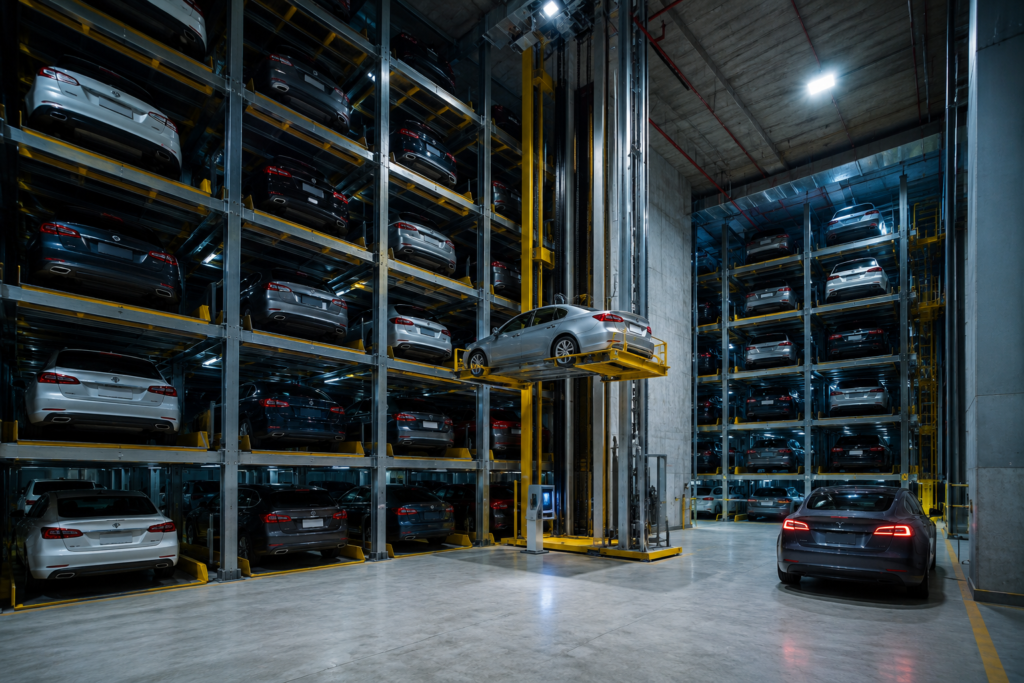
This dense, mechanical approach can increase a facility’s parking capacity by up to sixty percent within the exact same structural footprint compared to conventional ramp-based garages. Commercial developers leverage this extraordinary spatial efficiency to reclaim valuable above-ground space for more lucrative uses, such as additional retail square footage or premium office space. The underground volume is monetized to its absolute maximum potential.
Custom fabrication of these complex mechanical components is absolutely essential to accommodate the diverse sizes of modern vehicles, from compact electric city cars to full-sized luxury SUVs. Wholesale manufacturers work intimately with structural engineers to ensure these heavy-duty steel systems meet local seismic load requirements and fire safety codes. Every inch of the mechanical grid is optimized for the specific client demographic.
Mastering the integration of these complex, multi-axis mechanical systems allows commercial properties to achieve an unprecedented level of spatial efficiency. This capability is a critical differentiator for urban developments where land is scarce and maximizing the buildable area is the primary financial driver of the project.
3.2. Why Labor Cost Reduction Appeals to Large-Scale Operators
Large-scale commercial operators, such as multinational property management firms and airport authorities, manage extensive portfolios where incremental labor costs compound into massive annual expenditures. Even a slight increase in minimum wage or the need for 24/7 staffing can severely degrade the profitability of a parking asset. Automated solutions offer a definitive, structural cure to this ongoing financial drain.
By deploying a fully automated parking system, operators can centralize their oversight, staffing a single remote monitoring center capable of managing dozens of geographically dispersed facilities simultaneously. If a mechanical issue arises, a remote technician can diagnose the problem and often resolve it through software resets without ever dispatching a truck to the site. This centralized model fundamentally disrupts traditional facility staffing paradigms.
The appeal for wholesale buyers lies in the highly scalable nature of this labor reduction. A bulk order of standardized automated units can be deployed across an entire regional portfolio, instantly standardizing the operational model and multiplying the cost savings exponentially. Training is simplified, and staff can be reallocated to higher-value customer service roles rather than manual toll collection.
As global labor markets continue to tighten and the cost of skilled tradespeople rises, the ability to offer a high-capacity, zero-labor parking solution will become a defining competitive advantage for B2B suppliers. Positioning automation as a labor-hedge strategy is highly effective when negotiating with sophisticated commercial real estate investors in 2025.
3.3. Which Custom Fabrication Options Ensure Structural Compatibility
No two commercial building foundations or architectural layouts are identical, making off-the-shelf automated parking components highly impractical and often dangerous. Custom fabrication options are an absolute necessity to ensure that the automated parking system integrates seamlessly and safely with the existing or planned structural framework of the building. Standardized parts simply cannot account for unique site variables.
Wholesale manufacturers offer tailored steel constructs, customized platform dimensions, and specifically engineered entry/exit transfer cabin sizes to match the exact constraints of each development project. This bespoke approach prevents incredibly costly structural modifications, such as unnecessary demolition or reinforced concrete pouring, after the equipment arrives on site. Every structural beam and mechanical rail is designed to fit the specific architectural blueprint.
Advanced 3D structural modeling and Building Information Modeling (BIM) compatibility are now standard, mandatory offerings from top-tier wholesale suppliers. These digital tools allow commercial developers to visualize the custom automated system interacting with the building’s digital twin before any physical manufacturing begins. Clash detection ensures the parking machinery will not interfere with HVAC ducts or structural columns.
Providing this elite level of custom structural engineering not only accelerates the installation timeline but also guarantees the long-term structural integrity and safety of the commercial property investment. It represents the pinnacle of B2B service in the parking infrastructure sector.
4. How to Source a Car Parking System Through Wholesale Channels
Procuring a car parking system through wholesale channels is fundamentally different from purchasing standard construction materials. It requires establishing a strategic, long-term partnership with a manufacturer capable of delivering both massive production scale and highly specific, project-level customization. The stakes are high, as the equipment must function flawlessly for decades.
The wholesale procurement process demands rigorous vetting of the supplier’s production capacity, quality control methodologies, and engineering flexibility. B2B buyers must look far beyond the initial unit pricing to evaluate the total value chain the manufacturer can provide, including design assistance, logistical support, and post-installation service. A low upfront price often masks massive hidden costs in customization restrictions or delayed shipping.
Effective sourcing also involves negotiating comprehensive service level agreements (SLAs) that clearly define the responsibilities for installation oversight, software updates, and long-term spare parts availability. A cheap initial hardware purchase quickly becomes a catastrophic liability if the wholesale supplier cannot provide reliable, rapid after-sales support when a critical mechanical component fails.
Navigating this complex procurement landscape correctly ensures that commercial developers secure a parking infrastructure that is both highly cost-effective and perfectly tailored to their project’s unique operational and structural specifications. It transforms the buying process from a simple transaction into a strategic asset acquisition.
4.1. Why Direct Manufacturer Partnerships Yield Better Customization
Relying on third-party trading companies or regional distributors often severely dilutes the level of technical customization available for a complex car parking system. These intermediaries act as communication bottlenecks, often misinterpreting the nuanced structural requirements of the commercial developer. Direct engagement with the original equipment manufacturer (OEM) removes these dangerous communication barriers.
When wholesale buyers partner directly with the factory floor, they gain immediate, unfiltered access to the engineering teams responsible for designing the system. This direct feedback loop drastically reduces the turnaround time for custom structural modifications and specialized software requests. Changes can be implemented and approved in days rather than weeks, keeping the construction schedule on track.
Direct partnerships also eliminate the costly markups applied by middlemen, freeing up significant capital that can be reinvested into upgrading the technology or expanding the overall scope of the smart parking system. This financial efficiency is absolutely crucial for large-scale commercial developments operating on strict, non-negotiable budgets.
Establishing these direct, transparent B2B relationships is rapidly becoming the gold standard in the industry. The sheer complexity of modern 2025 commercial parking projects demands highly collaborative, end-to-end manufacturing partnerships that distributors simply cannot facilitate.
4.2. How Bulk Procurement Strategies Lower Total Cost of Ownership
The total cost of ownership (TCO) for a modern car parking system extends far beyond the initial manufacturing and installation invoice. It encompasses shipping, ongoing maintenance, software licensing, energy consumption, and eventual system decommissioning. Bulk procurement strategies directly attack and reduce these various TCO phases.
By consolidating orders for multiple commercial properties into a single, massive wholesale contract, buyers leverage immense economies of scale. This bulk buying power forces down the unit cost of the hardware and often secures highly favorable, locked-in pricing on essential spare parts inventories. Suppliers are highly motivated to offer aggressive discounts to win large-volume, multi-site contracts.
Standardizing on a single, unified smart parking system platform across an entire real estate portfolio further reduces TCO by radically simplifying staff training and centralizing technical support. Maintenance crews only need to be trained on one specific set of hardware and software protocols, reducing the need for highly specialized, multi-disciplinary technicians.
Forward-thinking commercial real estate firms are actively utilizing these bulk procurement strategies in 2025 to lock in favorable pricing and secure priority production slots. This proactive approach insulates their development pipelines against the anticipated material cost increases and supply chain tightening predicted for 2026.
4.3. Which Quality Assurance Protocols Protect Large-Scale Investments
A large-scale commercial parking installation represents a multimillion-dollar capital investment that must be aggressively protected by stringent, verifiable quality assurance (QA) protocols. Wholesale suppliers must be able to demonstrate documented, internationally recognized QA processes at every single stage of the manufacturing cycle. Trusting a manufacturer without verified QA protocols is an unacceptable risk.
This protection begins at the molecular level, with the sourcing of high-yield structural steel and industrial-grade, weather-resistant electronic components. Rigorous factory acceptance testing (FAT) must be conducted on every automated parking system module, simulating thousands of operational cycles to identify any mechanical fatigue or software glitches before the equipment leaves the factory floor.
Site acceptance testing (SAT) immediately follows the physical installation, ensuring that the custom-configured system operates flawlessly within the specific environmental conditions of the commercial property. These dual-layer testing protocols, covering both factory and field conditions, prevent catastrophic systemic failures and ensure immediate operational readiness.
Insisting on comprehensive QA documentation, material traceability certificates, and international safety certifications gives wholesale buyers the contractual assurance needed to safeguard their capital investments. It provides the empirical evidence required to satisfy institutional investors and strict municipal building inspectors.
5. Which Future-Proofing Strategies Should Guide Your 2026 Investment
The rapid evolution of urban mobility, driven by electrification and autonomous driving, requires commercial real estate developers to look far past current utilization needs. Investing in a car parking system without a comprehensive future-proofing strategy risks premature technological obsolescence. A static infrastructure will quickly lose value as the automotive landscape shifts.
Anticipating the specific technological trends of 2026 involves preparing physical and digital infrastructure for the mass adoption of electric vehicles (EVs) and the eventual arrival of autonomous fleets. The systems deployed today must be inherently adaptable, capable of receiving hardware and software upgrades without requiring the demolition of the existing steel framework. Flexibility is the ultimate asset.
Wholesale buyers play a pivotal role in driving this industry innovation by demanding modular, upgradeable systems from their manufacturing partners. The procurement focus must shift from evaluating static concrete structures to assessing dynamic, technologically elastic platforms that can evolve alongside the automotive market.
Embedding these aggressive future-proofing strategies into the initial procurement process ensures that the commercial property remains a highly competitive, premium-tier asset for decades. It protects the developer’s initial investment and guarantees that the facility can adapt to whatever the future of urban mobility holds.
5.1. How EV Charging Integration Shapes the 2026 Market Outlook
The exponential, global growth of electric vehicle adoption is fundamentally reshaping the baseline requirements for commercial parking infrastructure. Industry forecasts indicate that by 2026, an estimated fifty percent of all new vehicles sold in major metropolitan markets will feature electric powertrains. Commercial properties without adequate charging infrastructure will face severe tenant retention issues.
A modern smart parking system must now inherently accommodate high-voltage EV charging at a massive scale. This requirement goes far beyond simply bolting a few standalone chargers to the wall; it demands custom electrical engineering within the parking structure itself. Upgraded facility grid connections, specialized heavy-duty cable routing, and integrated thermal management systems are required to prevent fire hazards in enclosed spaces.
Wholesale manufacturers who integrate charging capabilities directly into the core architecture of an automated parking system offer a massive, distinct value proposition. In these advanced systems, vehicles can be charged automatically while parked in the mechanical grid, optimizing energy distribution through intelligent, off-peak load balancing managed by the facility’s software.
Failing to integrate robust, scalable EV infrastructure during the initial construction phase will severely degrade the long-term attractiveness of a commercial property. Premium corporate tenants are increasingly bound by strict ESG (Environmental, Social, and Governance) mandates that require them to lease office space equipped with green amenities like EV charging.
5.2. Why AI-Driven License Plate Recognition Is Becoming Standard
Frictionless entry and exit represent the ultimate operational goal for modern commercial parking, and AI-driven license plate recognition (LPR) is the technology finally delivering this seamless experience. Traditional ticketing systems, which rely on physical paper tickets or magnetic stripes, are rapidly being phased out due to their high maintenance costs, frequent jamming, and inherent user friction.
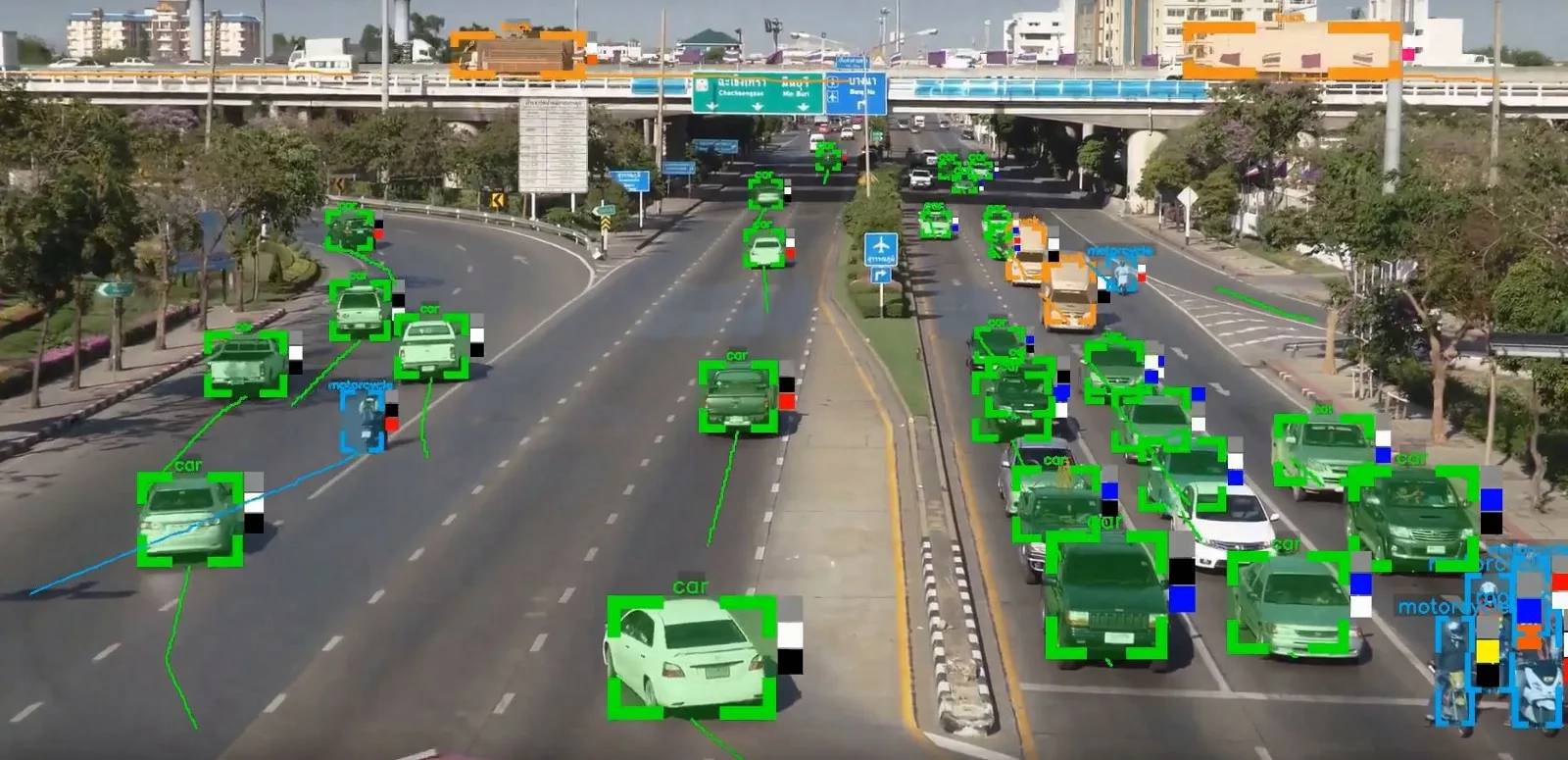
Advanced LPR camera systems, integrated directly into a smart parking system, can read and process license plates with near-perfect accuracy across varying weather conditions, lighting scenarios, and vehicle speeds. This powerful artificial intelligence eliminates the need for physical tickets entirely, reducing material waste, removing ticket machine maintenance, and accelerating the entry process to under two seconds.
For wholesale buyers, sourcing systems with built-in, high-processing-power AI edge computing ensures that the LPR functionality operates smoothly and securely even during complete network outages. Furthermore, custom algorithm training can be provided by the manufacturer to accommodate highly specific regional license plate formats, fonts, and mounting positions.
Implementing AI-driven LPR technology streamlines the entire user journey, significantly boosting the vehicular throughput capacity of the commercial property’s entry and exit plazas. It establishes a premium, high-tech image for the facility while drastically reducing the labor required to manage access control and revenue enforcement.
5.3. Which Modular Designs Allow for Future Expansion
Commercial real estate development frequently occurs in distinct phases, dictated by financing milestones and tenant lease-ups. This phased approach requires parking infrastructure that can grow organically alongside the property without disrupting existing operations. Modular mechanical and software designs provide the exact physical and logical scalability needed to execute these expansions flawlessly.
An automated parking system built on a strict modular framework allows additional steel parking bays, extra robotic shuttles, or new transfer cabins to be bolted onto the existing structure with minimal downtime. This plug-and-play physical capability is highly attractive to developers who cannot afford to halt operations in a fully functioning commercial garage to expand capacity.
Wholesale suppliers specializing in modular steel fabrication provide B2B buyers with a genuinely future-proof asset that adapts dynamically to fluctuating market demands. Instead of over-building the initial phase and wasting capital on unused capacity, developers can invest precisely in current demand and expand the infrastructure only when hard utilization metrics definitively justify the expansion.
Prioritizing modular architecture in 2025 procurement strategies ensures that commercial properties remain agile, financially optimized, and fully capable of scaling toward their maximum 2026 potential. It represents the most fiscally responsible approach to managing the uncertainties of long-term commercial real estate development.
Conclusion
Selecting the optimal parking infrastructure for commercial properties is a complex, high-stakes decision that dictates the operational success and financial viability of the entire real estate asset. By prioritizing strategic wholesale partnerships, demanding rigorous structural and software customization, and leveraging advanced smart and automated technologies, B2B buyers can secure systems that dramatically reduce overhead while maximizing spatial efficiency. The industry is rapidly advancing toward AI-driven, EV-ready, and highly integrated ecosystems, making forward-looking procurement strategies more critical than ever before. Contact our wholesale manufacturing team today to discuss your commercial property specifications and discover how our fully customizable parking solutions can elevate your next development project.