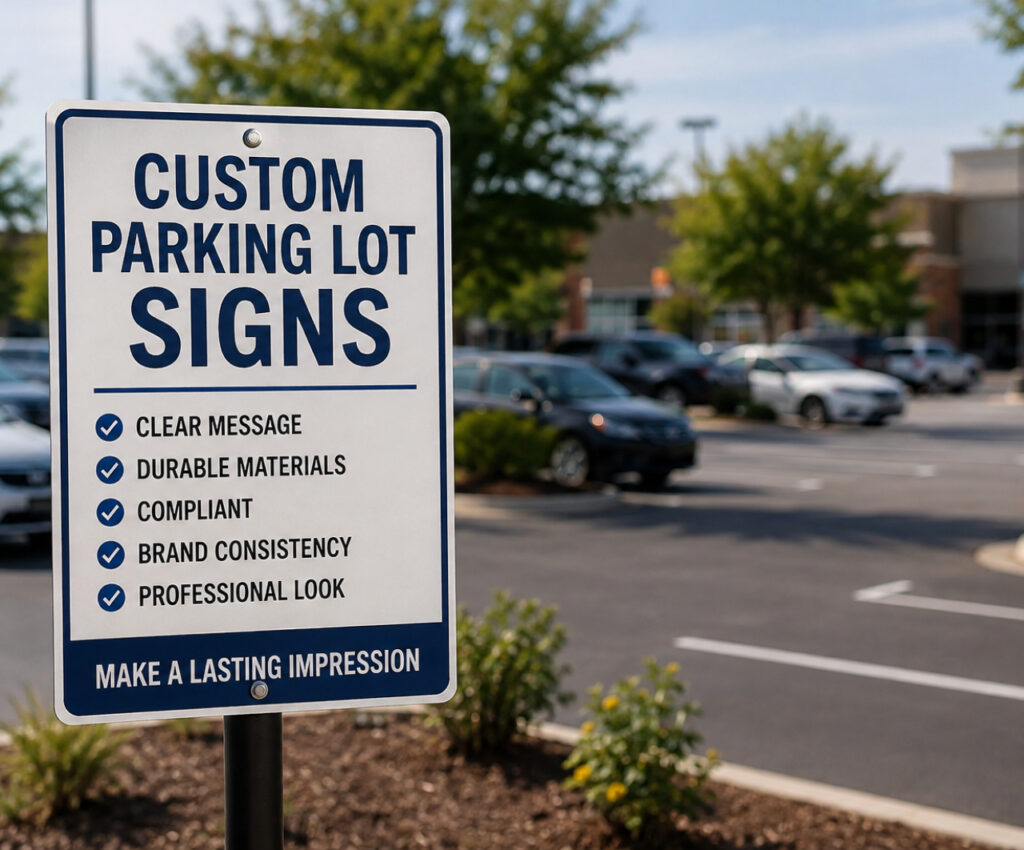
1. Why Custom Parking Lot Signs Are a Critical Business Investment in 2025
Investing in high-quality commercial parking lot signs has transitioned from a mere regulatory afterthought to a central pillar of facility management and risk mitigation. As commercial real estate portfolios expand and tenant expectations rise, property managers are realizing that generic, off-the-shelf signage fails to address the nuanced needs of modern mixed-use developments. Custom parking lot signs provide the precise messaging required to dictate traffic flow, reserve premium spaces, and enforce liability boundaries across expansive corporate campuses. This targeted approach to wayfinding ultimately protects property owners from frivolous litigation while streamlining the daily operational efficiency of parking structures.
The push toward bespoke signage solutions is happening because the legal landscape surrounding premises liability has become increasingly complex. Ambiguous parking rules often lead to disputes, vehicle damage, or pedestrian accidents, all of which can result in costly lawsuits against property owners. By clearly delineating speed limits, pedestrian zones, and restricted areas, businesses establish a strong legal defense by demonstrating proactive risk management. Consequently, this shift impacts buyers by forcing them to view signage not as a disposable maintenance expense, but as a vital insurance policy that safeguards their underlying real estate assets.
This evolving risk profile directly affects wholesale buyers by altering their procurement criteria and budget allocations. Facility managers and procurement officers can no longer afford to source the cheapest available options, as subpar materials degrade quickly and lead to compliance failures. Instead, they must seek out durable, highly visible custom parking lot signs that withstand harsh environmental conditions while maintaining legibility over years of continuous exposure. The financial impact of replacing faded or damaged signs every few years far outweighs the initial premium paid for commercial-grade, customized solutions.
Businesses should respond to these challenges by partnering directly with manufacturers capable of producing large-scale, tailored signage batches that meet exact municipal codes. By consolidating their purchasing power and ordering wholesale, companies can secure superior grade materials at a fraction of the retail cost per unit. Engaging with a specialized supplier early in the site planning phase ensures that every custom specification is met, ultimately future-proofing the property against impending regulatory changes and reducing long-term maintenance overhead.
1.1. How Safety Regulations Drive the Need for Commercial Parking Lot Signs
Safety regulations governing commercial properties have undergone significant updates in 2025, particularly concerning pedestrian-vehicle separation and emergency access routing. Municipalities are now enforcing stricter guidelines on how parking facilities communicate fire lane boundaries, handicap accessibility, and electric vehicle charging protocols. Standardized commercial parking lot signs are no longer sufficient to satisfy these granular municipal codes, as local ordinances frequently require specific font sizes, color contrasts, and reflective grades tailored to the exact layout of a specific lot.
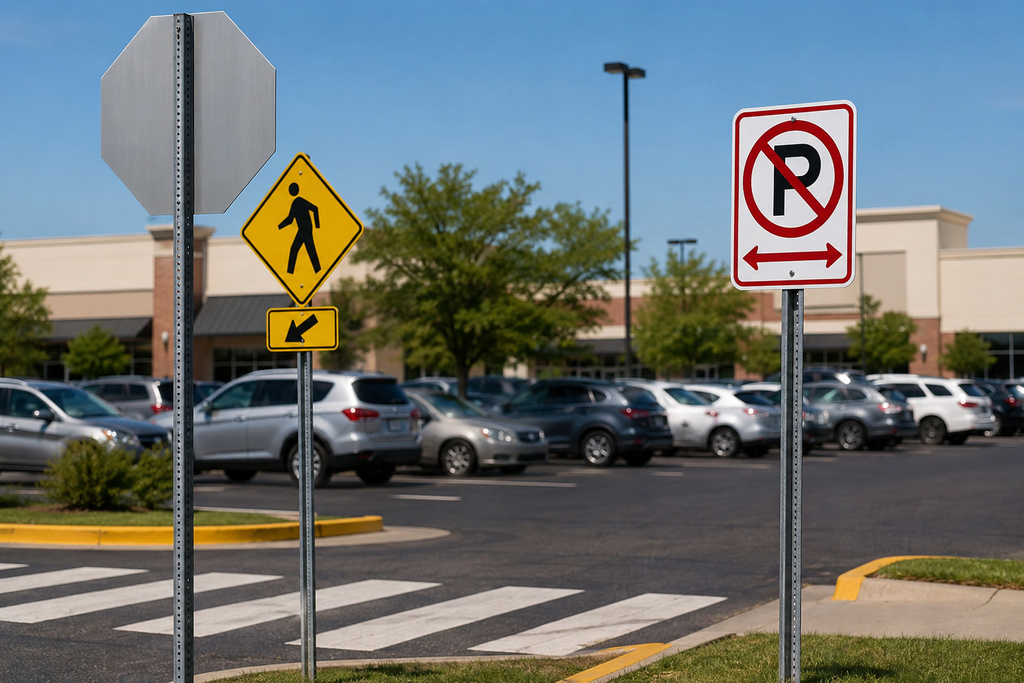
This regulatory tightening is occurring because urban congestion and the rapid proliferation of electric and autonomous vehicles have introduced new hazards to traditional parking environments. Cities are attempting to reduce infrastructure bottlenecks and accident rates by mandating clearer, more explicit communication through physical infrastructure. The integration of EV charging stations, for example, requires highly specific messaging to prevent non-EV vehicles from blocking critical charging infrastructure, a scenario traditional signage simply did not anticipate a decade ago.
For buyers, this means that relying on generic parking lot signs for sale at local hardware stores introduces significant compliance risks that can result in failed safety inspections or hefty municipal fines. Procurement teams must now conduct thorough audits of their properties to identify gaps between their current signage and updated local codes. The complexity of navigating these varying regional regulations makes it essential to work with a wholesaler who understands compliance nuances and can manufacture signs that meet precise legal specifications without requiring costly redesigns.
The most effective response is for businesses to adopt a proactive compliance strategy by sourcing their commercial parking lot signs through vendors that offer extensive customization options. Buyers should provide their wholesale partners with local code specifications upfront, allowing the manufacturer to engineer signs that perfectly align with legal requirements. Establishing this collaborative relationship ensures that bulk orders are produced correctly the first time, eliminating the risk of project delays and ensuring immediate compliance upon installation.
1.2. Which 2025 Statistics Highlight the Growing Demand for Custom Signage
Recent industry data from early 2025 reveals that the commercial signage market has experienced a 14.5% year-over-year increase in bespoke outdoor wayfinding products, driven heavily by the revitalization of corporate real estate. Research indicates that properties utilizing highly customized, brand-aligned exterior signage report a 22% higher tenant satisfaction score compared to those utilizing standard, generic markers. Furthermore, wholesale orders for custom parking lot signs have surged as property management firms consolidate their vendor networks to ensure uniformity across geographically dispersed portfolios.
These statistical trends are happening because corporate tenants are increasingly prioritizing the aesthetic cohesion and professional appearance of the facilities they lease. In a competitive commercial real estate market, property owners are leveraging every physical touchpoint to elevate their brand prestige and attract high-paying corporate clients. Customized signage serves as a subtle yet powerful marketing tool that communicates attention to detail and a premium tenant experience, transforming a utilitarian parking lot into an extension of the corporate brand identity.
The surge in demand directly impacts wholesale buyers by creating supply chain constraints for those who delay their procurement cycles. As manufacturers prioritize larger, custom contracts, buyers who rely on last-minute, off-the-shelf purchases may find themselves facing extended lead times or limited material options. Additionally, the rising demand has shifted market pricing, making bulk purchasing and wholesale lock-in agreements more financially advantageous than ever before for buyers looking to scale their operations.
Businesses should respond to these market dynamics by securing their wholesale contracts for custom parking lot signs well in advance of their planned facility upgrades or new construction completions. By analyzing 2025 market trends, procurement officers can accurately forecast their signage needs for late 2025 and into 2026, locking in favorable bulk pricing before anticipated material cost increases. Taking a data-driven approach to purchasing allows businesses to leverage economies of scale while ensuring their properties remain competitive in a demanding real estate landscape.
2. How to Evaluate Parking Lot Signs for Sale on the Wholesale Market
Evaluating parking lot signs for sale on the wholesale market requires a fundamentally different approach than purchasing individual retail units. B2B buyers must look beyond the initial price tag and scrutinize the manufacturing processes, material certifications, and batch consistency of the supplier. A rigorous evaluation process ensures that the purchased signs will perform reliably in high-traffic commercial environments and maintain structural integrity over a multi-year lifecycle. This level of scrutiny is essential for protecting the buyer’s investment and maintaining the professional standards of their managed properties.

The necessity for this heightened evaluation stems from the vast disparity in manufacturing quality that exists within the wholesale signage industry. Overseas mass production has flooded the market with inexpensive signs that utilize inferior inks, low-grade aluminum, and inadequate UV protective coatings. While these options may appear cost-effective initially, they are prone to rapid fading, rusting, and delamination, which ultimately damages the reputation of the property displaying them. Buyers must understand that wholesale pricing should reflect volume discounts on premium goods, not a reduction in manufacturing standards.
Poor evaluation practices directly impact buyers by dramatically increasing their total cost of ownership through frequent replacement cycles and potential compliance failures. If a procurement officer purchases a batch of five hundred signs only to find that the reflective sheeting fails within six months, the labor costs alone to replace those signs across multiple properties can be catastrophic. Furthermore, inconsistent color matching between different batches of wholesale orders can result in a disjointed, unprofessional appearance that undermines the property’s brand identity.
To navigate these pitfalls, buyers should implement a strict vendor qualification process that includes requesting physical material samples, verifying ASTM and MUTCD compliance documentation, and reviewing the warranties offered by the wholesaler. Conducting a small-scale test order before committing to a massive bulk purchase allows buyers to verify the durability and color accuracy of the custom parking lot signs in real-world conditions. Establishing these baseline quality metrics empowers B2B buyers to make informed, objective purchasing decisions that prioritize long-term value over short-term savings.
2.1. Which Material Options Offer the Best ROI for Bulk Buyers
Selecting the optimal material for commercial parking lot signs is the single most critical decision a bulk buyer can make to maximize their return on investment. The industry standard for premium outdoor signage is heavy-gauge aluminum, typically ranging from .080 to .125 inches in thickness, due to its exceptional strength-to-weight ratio and inherent rust resistance. For high-impact areas or ground-mounted installations, steel or dense polyethylene plastics may also be utilized, though aluminum remains the dominant choice for overhead and post-mounted wayfinding.
Aluminum consistently delivers the best ROI because it requires virtually zero maintenance over a lifespan that can exceed a decade in moderate climates. Unlike ferrous metals that rust or plastics that become brittle and crack under UV exposure, high-quality aluminum maintains its structural rigidity and flat surface, ensuring that custom graphics remain highly visible. The initial premium paid for heavy-gauge aluminum is quickly offset by the elimination of replacement costs, making it the most economically viable option for large-scale commercial deployments.
The choice of material profoundly impacts the buyer’s operational budget by dictating the frequency of maintenance interventions and the complexity of installation. Heavier, lower-quality materials require more robust mounting hardware and increased labor time during installation, which inflates the overall project cost. Conversely, utilizing premium, lightweight aluminum allows installation crews to deploy custom parking lot signs rapidly and efficiently, reducing labor hours and minimizing disruption to the facility’s daily operations.
Buyers should respond by standardizing their material specifications across their entire property portfolio to leverage the greatest possible wholesale discounts. By committing to a single high-grade aluminum alloy for all their commercial parking lot signs, procurement teams can negotiate better pricing tiers and ensure absolute visual consistency from one location to the next. Establishing this standardized material baseline also simplifies inventory management, as maintenance crews only need to stock one type of mounting hardware for all future signage replacements or expansions.
2.2. How Customization Enhances Brand Identity and Compliance
Customization in commercial signage serves as the critical bridge between strict regulatory compliance and sophisticated corporate brand identity. By utilizing advanced digital printing and precision cutting technologies, manufacturers can integrate corporate logos, specific brand colors, and custom typography directly onto mandated traffic control signs. This dual-purpose approach ensures that the parking facility fulfills all legal requirements for wayfinding and safety while simultaneously projecting a cohesive, premium brand image to visitors and tenants.
This fusion of branding and compliance is gaining traction because modern corporations view their physical facilities as direct extensions of their marketing ecosystems. A parking lot is often the first physical touchpoint a client or employee has with a company, and generic signage creates a jarring, disconnected experience. Forward-thinking businesses are demanding that their custom parking lot signs reflect the same high-quality visual standards found in their interior office spaces, lobbies, and digital marketing materials, thereby elevating the perceived value of the entire property.
For the B2B buyer, this trend means that procurement can no longer be siloed within the facilities maintenance department; it requires active collaboration with corporate branding and marketing teams. Purchasing agents must now source parking lot signs for sale that can accommodate precise Pantone color matching and high-resolution graphic overlays without compromising the reflective properties required by traffic safety codes. Navigating these dual requirements necessitates finding a wholesale partner equipped with state-of-the-art printing technology and a deep understanding of municipal sign regulations.
Businesses should respond by developing comprehensive signage style guides that dictate exact color palettes, font families, and logo placement rules for all exterior wayfinding. Armed with these brand guidelines, procurement officers can approach wholesale manufacturers to create custom templates that can be rapidly deployed across multiple locations. This strategic approach not only guarantees brand consistency but also significantly accelerates the reorder process, as customized base designs can be easily modified for new tenants or updated safety protocols without starting from scratch.
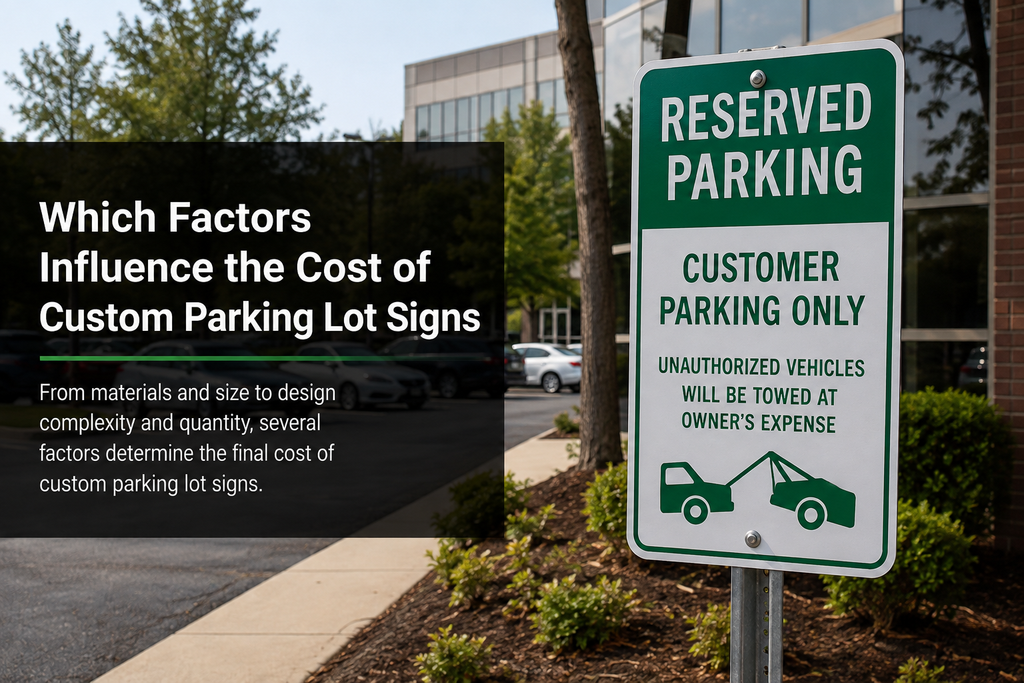
3. Which Factors Influence the Cost of Custom Parking Lot Signs
Understanding the cost drivers behind custom parking lot signs is essential for B2B buyers seeking to optimize their procurement budgets without sacrificing quality. The primary factors influencing price include the raw material substrate, the grade of reflective sheeting applied, the complexity of the custom graphic design, and the overall volume of the order. Additionally, specialized requirements such as anti-graffiti overlaminates or enhanced UV protection will add to the base cost, though they provide significant long-term financial benefits by extending the sign’s usable life.
These cost variables exist because the manufacturing of compliant outdoor signage involves multiple specialized labor and material processes. High-intensity prismatic reflective sheeting, for example, is significantly more expensive to produce and apply than standard engineer-grade reflective materials. Furthermore, incorporating complex custom logos requires precise color calibration and multi-pass digital printing, which consumes more time and resources than applying standard pre-cut vinyl lettering. Buyers must recognize that these costs are directly correlated with the visibility, durability, and legal compliance of the final product.
The interplay of these factors heavily impacts how buyers must structure their capital expenditure budgets. A buyer who focuses solely on the lowest unit price may inadvertently select a sign that lacks the necessary reflective grading for nighttime visibility, leading to safety incidents and subsequent liability claims. Conversely, over-specifying a sign for a low-traffic, secondary parking area ties up capital that could be better utilized elsewhere. Smart buyers understand that a strategic, tiered approach to signage specifications is required to balance safety, aesthetics, and financial constraints.
To manage these costs effectively, businesses should work closely with their wholesale suppliers to identify areas where standardizations can reduce expenses without impacting the end-user experience. For instance, a buyer might standardize the size and reflective grade of all stop and yield signs to achieve maximum volume discounts, while concentrating their custom design budget on high-visibility entry monuments and directional signs. This hybrid approach to purchasing custom parking lot signs ensures that every dollar spent directly contributes to either regulatory compliance or brand enhancement.
3.1. How Volume and Wholesale Pricing Models Work Together
Wholesale pricing models for commercial parking lot signs are fundamentally designed to reward volume purchases through tiered cost reductions. Manufacturers offset their fixed setup costs—such as digital file preparation, machine calibration, and material sourcing—by spreading these expenses across a larger quantity of units. As the order volume increases, the marginal cost of producing each additional sign decreases, allowing the wholesaler to pass these savings directly to the B2B buyer in the form of aggressive per-unit discounts.
This tiered pricing structure exists because the signage manufacturing process is highly automated, meaning the labor and time required to produce ten signs is only marginally less than producing one thousand signs. Once the printing presses and cutting machines are operational, the primary cost driver becomes the raw materials. By encouraging buyers to consolidate their orders into larger, less frequent batches, manufacturers can optimize their production schedules, minimize material waste, and maintain highly efficient supply chains.
For the buyer, understanding this model is transformative, as it changes the strategic approach to facility maintenance and procurement. Purchasing signs in small, fragmented batches throughout the year completely negates the financial benefits of wholesale pricing and results in drastically higher overall spending. Furthermore, fragmented purchasing leads to inconsistencies in color and material quality between batches, creating a disjointed appearance across the property. Buyers who fail to leverage volume pricing models are essentially penalizing their own organizations through inefficient procurement practices.
Businesses should respond by conducting a comprehensive audit of all their properties to aggregate their signage needs into a single, massive wholesale purchase order. By forecasting their requirements for the next twelve to eighteen months, procurement teams can unlock the highest possible discount tiers and secure a guaranteed supply of matching commercial parking lot signs. Implementing this centralized purchasing strategy requires internal coordination but ultimately yields massive cost savings and ensures absolute visual uniformity across the entire real estate portfolio.
3.2. Why Reflectivity and Durability Are Non-Negotiable for 2026
As the industry looks toward 2026, the reflectivity and physical durability of parking lot signage are becoming non-negotiable standards for commercial properties. Upcoming regulatory frameworks and anticipated updates to the Manual on Uniform Traffic Control Devices (MUTCD) are expected to mandate higher levels of retroreflectivity for private parking facilities. Signs that fail to meet these enhanced visibility standards will not only be deemed non-compliant but will actively endanger pedestrians and drivers in low-light conditions.
This impending regulatory shift is happening because traffic safety studies have conclusively demonstrated that inadequate nighttime sign visibility is a primary contributor to parking lot accidents. As vehicles become quieter, particularly with the rise of electric vehicles, drivers rely more heavily on visual cues to navigate safely through parking structures. Regulatory bodies are responding to this data by tightening the standards for private property signage, bringing them closer to the rigorous requirements currently enforced on public roadways.
For buyers, this shift means that investing in low-grade, non-reflective, or poorly coated parking lot signs for sale represents a severe financial and legal liability. Properties that fail to meet the 2026 reflectivity standards may face increased insurance premiums, denied liability claims in the event of an accident, and mandatory, expedited sign replacements at highly unfavorable costs. The financial impact of non-compliance far exceeds the premium associated with purchasing high-intensity prismatic or diamond-grade reflective materials from the outset.
The appropriate response is for procurement officers to immediately audit their existing signage inventory against the projected 2026 MUTCD standards and identify deficiencies. When placing new wholesale orders for custom parking lot signs, buyers must explicitly specify high-intensity prismatic sheeting or higher, ensuring that the signs will remain legally compliant and highly visible for at least a decade. Partnering with a forward-thinking manufacturer who is already anticipating these 2026 regulatory changes ensures that bulk purchases are future-proofed against imminent legal requirements.
4. How to Partner with the Right Manufacturer for Your Custom Parking Lot Signs
Securing the right manufacturing partner is the most critical step in executing a successful large-scale signage deployment. A qualified wholesale manufacturer brings more to the table than just production capabilities; they act as a strategic advisor who can assist with design optimization, material selection, and regulatory compliance. The ideal partner will possess a deep portfolio of commercial projects, robust quality control protocols, and the capacity to scale production seamlessly to meet aggressive project timelines.
The necessity for a highly vetted partner stems from the fact that custom signage is a highly specialized manufacturing discipline that requires precise calibration and strict adherence to industry standards. A manufacturer lacking experience in B2B deployments may produce visually appealing signs that fail to meet critical ASTM reflectivity ratings or utilize incorrect mounting hole placements. These seemingly minor manufacturing errors can result in massive logistical headaches, delayed installations, and complete rejection of the shipment by the buyer’s quality assurance team.
Choosing the wrong manufacturer impacts the buyer by turning a straightforward procurement task into a prolonged, resource-draining crisis. Project managers may find themselves constantly chasing updates, managing shipping delays, and dealing with hostile customer service representatives when attempting to rectify batch defects. In a B2B environment where facility openings or compliance deadlines are rigid, a manufacturer’s failure to deliver on time and to spec can have cascading financial consequences for the property owner.
Businesses should respond by implementing a rigorous RFP (Request for Proposal) process that explicitly tests a manufacturer’s competency in commercial parking lot signs. This process should include requesting verifiable client references, touring the manufacturing facility if possible, and demanding a physical proof of the custom design before authorizing full production. Establishing clear service level agreements (SLAs) regarding lead times, defect rates, and corrective actions ensures that the buyer maintains control over the partnership and holds the manufacturer accountable for their performance.
4.1. Which Red Flags to Avoid When Sourcing Commercial Parking Lot Signs
Identifying red flags during the vendor selection process is crucial for protecting your organization from subpar products and fraudulent business practices. One of the most glaring warning signs is a wholesaler who guarantees the lowest price in the market but refuses to provide material certifications or detailed specifications for their reflective sheeting. Other critical red flags include a lack of a physical manufacturing address, an absence of a structured quality assurance process, and an inability or unwillingness to produce a physical pre-production sample for approval.
These red flags are prevalent because the barrier to entry in the low-end signage market is remarkably low, allowing opportunistic brokers to masquerade as manufacturers. These brokers often outsource production to the cheapest available overseas factories, utilizing inferior raw materials and skipping vital quality control steps to maximize their own margins. They rely on the buyer’s inability to visually distinguish between high-grade and low-grade reflective materials until the signs have been installed and begin to degrade within a few short months.
Falling victim to these deceptive practices impacts buyers by completely destroying the ROI of their signage project and exposing their properties to significant compliance risks. A facility manager who installs three hundred substandard signs will inevitably face a nightmare scenario where the graphics fade, the aluminum begins to corrode, and the reflective properties vanish, all within the first year of installation. The subsequent cost of removing and replacing these defective signs—not to mention the labor involved—will dwarf any initial savings realized by choosing the unverified vendor.
To avoid these pitfalls, buyers must conduct thorough due diligence and absolutely refuse to finalize any wholesale contract without first inspecting a physical sample. Procurement teams should specifically ask potential vendors how their commercial parking lot signs perform under accelerated UV testing and whether their materials carry explicit certifications from entities like the ASTM or the Federal Highway Administration. Cutting ties immediately with any vendor who is evasive about their manufacturing processes or material origins is the most effective way to safeguard your investment.
4.2. How to Streamline the Ordering Process for Large-Scale Deployments
Streamlining the ordering process for large-scale signage deployments requires a transition from manual, email-based transactions to integrated digital procurement systems. Modern B2B commerce platforms allow buyers to upload custom designs, select materials, specify quantities, and track production statuses in real-time. By digitizing the workflow, organizations can eliminate the manual data entry errors and communication bottlenecks that typically plague high-volume custom orders.
This digital transformation is occurring because the sheer complexity of managing hundreds of unique custom parking lot signs across multiple properties makes traditional ordering methods obsolete. Manually tracking spreadsheet inventories, emailing artwork files back and forth, and reconciling physical invoices is highly inefficient and prone to costly mistakes. As supply chains become faster and more demanding, both buyers and manufacturers are recognizing that digital integration is the only viable method for managing large-scale wholesale transactions without overwhelming administrative staff.
For the buyer, implementing a streamlined digital ordering process drastically reduces the internal labor costs associated with procurement and project management. Facility managers can log into a centralized portal to view their entire portfolio’s signage history, instantly reorder previously customized signs, and approve digital proofs directly from their mobile devices. This level of operational efficiency accelerates project timelines, ensures absolute accuracy in custom specifications, and frees up procurement teams to focus on strategic vendor management rather than administrative trivia.
Businesses should respond by actively seeking out wholesale manufacturers that offer robust B2B e-commerce portals or API integration capabilities with their existing ERP (Enterprise Resource Planning) systems. Before initiating a massive deployment, buyers should work with their chosen vendor to digitize their entire signage library, creating a secure, cloud-based catalog of all their custom assets. Establishing this digital foundation transforms the procurement of commercial parking lot signs from a reactive, time-consuming chore into a proactive, automated operational advantage.
5. Why Your Next Step Should Be Upgrading Your Facility’s Signage
Upgrading your facility’s signage is no longer a deferred maintenance task; it is a strategic business initiative that yields immediate returns in safety, compliance, and brand equity. Outdated, faded, or inconsistent parking lot markers actively degrade the professional image of your property and create unnecessary vulnerabilities in your risk management strategy. Initiating a comprehensive upgrade to modern, customized signage immediately signals to tenants, visitors, and inspectors that your organization prioritizes quality, safety, and attention to detail.
The urgency to upgrade is happening now because the convergence of updated 2025 safety regulations, shifting corporate branding standards, and the impending 2026 reflectivity mandates has created a narrow window for proactive compliance. Properties that delay their upgrades risk being caught off-guard by sudden enforcement actions or being forced to execute expensive, rushed purchases at the height of demand. Upgrading under a strategic, planned timeline allows businesses to control costs, ensure quality, and phase the installations to minimize disruption to daily operations.
This proactive approach impacts buyers by shifting their mindset from reactive spending to strategic capital investment. Instead of piecemealing replacements as signs fail—often at premium emergency pricing—procurement teams can leverage their upcoming upgrade as a lever to negotiate massive wholesale discounts. By consolidating the spend into a single, well-planned initiative, buyers not only reduce the total cost of the project but also secure a unified, aesthetically pleasing result that enhances the overall valuation of the commercial property.
Businesses should respond by immediately scheduling a comprehensive site assessment with a reputable wholesale manufacturer to quantify the scope of the required upgrade. This assessment should map out every required custom parking lot sign, identify current compliance gaps, and establish a phased rollout schedule that aligns with the organization’s capital expenditure budget. Taking this decisive first step transforms a looming compliance liability into a manageable, high-value project that will serve the facility for the next decade. Contact a specialized wholesale signage partner today to request your facility audit and secure your 2025 pricing.
Conclusion: Why Upgrading Your Custom Parking Lot Signs Secures Future Growth
Transitioning from planning to execution is the most critical phase in optimizing your facility’s wayfinding infrastructure. Market data from 2025 clearly demonstrates that properties leveraging highly customized, brand-aligned commercial parking lot signs consistently outperform competitors in tenant retention and perceived property value. By consolidating your signage needs into a single, strategically planned wholesale purchase, you transform a routine maintenance task into a long-term capital investment. This proactive approach ensures that every directional marker, restriction notice, and safety sign serves a dual purpose of legal compliance and corporate brand reinforcement.
The urgency to act is driven by the rapid approach of stringent 2026 visibility and reflectivity mandates, which are already reshaping the industry supply chain. As regulatory bodies enforce higher standards for nighttime pedestrian safety, the availability of compliant parking lot signs for sale at budget-tier pricing will inevitably shrink. Manufacturers are currently adjusting their production lines to meet these elevated material standards, meaning that buyers who wait until the regulations are fully enforced will face premium surcharges and prolonged lead times. Securing your inventory now guarantees that your properties are future-proofed against these impending legal requirements without incurring emergency procurement costs.
For B2B buyers, this strategic timing directly impacts the total cost of ownership and operational efficiency across their entire real estate portfolio. Delaying the upgrade means continuing to expend resources on patching failing, non-compliant signs, a practice that introduces continuous liability risks and disrupts facility operations with perpetual installation projects. Conversely, executing a comprehensive rollout of custom parking lot signs under a unified wholesale contract locks in favorable pricing, guarantees batch consistency, and drastically reduces long-term maintenance overhead. The financial calculus is straightforward, with the return on investment for premium, compliant signage far outweighing the hidden costs of inaction.
The most effective response is to engage a specialized wholesale manufacturer today to conduct a final site audit and initiate the proofing process for your customized designs. By establishing this partnership now, your organization gains access to expert compliance guidance, state-of-the-art digital printing capabilities, and the volume discounts necessary to maximize your budget. Do not allow regulatory deadlines and supply chain constraints to dictate your facility management strategy. Reach out to a premium wholesale signage provider to finalize your custom order, secure 2025 pricing, and ensure your properties project safety, compliance, and professionalism for years to come.
Frequently Asked Questions
1. Why Do Businesses Invest in Custom Parking Lot Signs
Businesses invest in custom parking lot signs to align strict 2026 safety compliance with corporate branding strategies. Sourcing these commercial parking lot signs through wholesale channels maximizes ROI while ensuring batch consistency across large portfolios.
2. How Do 2025 Statistics Impact the Purchase of Parking Lot Signs for Sale
Early 2025 data shows a 14.5% surge in bespoke wayfinding demand as commercial real estate rebounds. Buyers must secure parking lot signs for sale now to avoid impending 2026 supply chain bottlenecks and premium pricing surges.
3. Which Materials Provide the Best Value for Commercial Parking Lot Signs
Heavy-gauge aluminum provides the ultimate longevity for commercial parking lot signs by eliminating rust and structural warping. Wholesale buyers standardizing on this premium material drastically reduce their total cost of ownership over a ten-year lifecycle.
4. Why Is Wholesale Customization Essential for 2026 Regulatory Compliance
Upcoming 2026 mandates require high-intensity prismatic reflectivity that generic signage simply cannot provide. Utilizing wholesale customization allows buyers to spec these premium materials precisely, ensuring legal compliance without overpaying at retail.
5. How Can Procurement Teams Avoid Low-Quality Parking Lot Signs for Sale
Procurement teams avoid inferior parking lot signs for sale by demanding ASTM compliance documentation and physical pre-production samples. This rigorous vetting process prevents the rapid fading and structural failures common with low-tier overseas imports.
6. Which Customization Features Elevate the Value of Custom Parking Lot Signs
Integrating precise Pantone color matching and corporate logos elevates custom parking lot signs from basic traffic controls to branding assets. These customized elements significantly boost the 22% higher tenant satisfaction scores reported in 2025 commercial real estate studies.
7. Why Should Buyers Consolidate Orders for Commercial Parking Lot Signs
Consolidating orders allows wholesale buyers to leverage tiered pricing models that drastically lower the per-unit cost. This bulk purchasing strategy also guarantees absolute visual uniformity across geographically dispersed commercial parking lot signs.
8. How Does Digital Integration Streamline Ordering Custom Parking Lot Signs
Digital B2B portals eliminate manual data entry errors when ordering complex custom parking lot signs across multiple facilities. Procurement officers can track 2025 bulk shipments in real-time, ensuring strict adherence to project installation timelines.
9. Which Red Flags Indicate Unreliable Parking Lot Signs for Sale
Vendors offering parking lot signs for sale without verifiable reflective sheeting certifications present a massive compliance risk. Buyers must immediately disqualify suppliers who refuse to provide physical proofs or lack transparent manufacturing addresses.
10. Why Is Partnering Directly with a Manufacturer Better for Bulk Purchases
Direct manufacturer partnerships eliminate broker markups and provide immediate access to specialized wholesale customization capabilities. This direct line of communication is critical for efficiently navigating the complex 2026 traffic visibility regulations.