Protecting infrastructure and ensuring pedestrian safety are top priorities for any business operating in high-traffic environments. Implementing a robust physical security system is not merely a precaution but a necessity in modern urban planning and facility management. This guide explores the critical role of steel bollards in safeguarding assets, managing traffic flow, and enhancing architectural aesthetics. By understanding the nuances of material selection, customization, and procurement, businesses can make informed decisions that offer long-term value and protection.
1. Why Steel Bollards Are Critical for Modern Infrastructure Protection
Steel bollards serve as the first line of defense against accidental vehicle collisions and intentional ram-raiding attempts, providing a rigid barrier that protects buildings and pedestrians. The inherent strength of steel allows these installations to absorb significant impact forces, thereby minimizing structural damage to storefronts and sensitive infrastructure. For commercial properties, the presence of sturdy barriers acts as a powerful psychological deterrent, signaling that the premises are secure and monitored. Investing in high-quality steel solutions ensures that a business mitigates liability risks associated with parking lot accidents and unauthorized vehicle access.
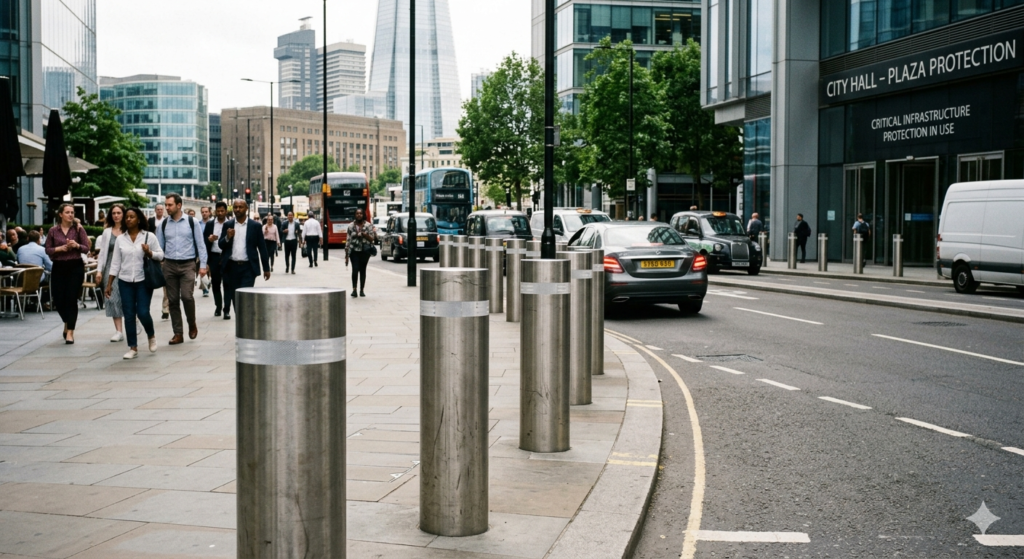
The versatility of a steel bollard extends beyond simple impact resistance, offering a flexible solution for various architectural and security requirements. Whether the goal is to define perimeters, guide traffic, or secure loading docks, these fixtures provide a reliable physical block that integrates seamlessly into existing landscapes. Their durability ensures that they withstand harsh weather conditions and daily wear without compromising performance. This resilience makes them an indispensable component of industrial safety protocols, where heavy machinery and constant vehicle movement pose ongoing threats to operational safety.
Furthermore, the integration of security bollards into urban design has evolved to meet increasingly sophisticated safety standards without sacrificing visual appeal. Modern designs allow these functional barriers to complement the surrounding architecture, proving that safety does not need to be unsightly. By choosing the right styles and finishes, property managers can maintain an inviting atmosphere for customers while ensuring maximum protection against external threats. This balance between form and function is essential for businesses that prioritize both customer experience and asset security.
Finally, the economic implications of installing protective barriers cannot be overlooked, as the cost of prevention is significantly lower than the cost of repairs. A single vehicle collision can result in exorbitant repair bills, operational downtime, and potential inventory loss that can cripple a business. By proactively installing a steel bollard system, companies effectively insure themselves against these unforeseen events, ensuring business continuity. This strategic approach to infrastructure protection demonstrates foresight and a commitment to maintaining a safe environment for employees and visitors alike.
2. How Different Grades of Steel Bollards Determine Longevity
Selecting the appropriate grade of steel is paramount to ensuring the longevity and effectiveness of the installed security measures. Not all steel is created equal; variations in tensile strength and corrosion resistance directly influence the lifespan of the product. For industrial applications, using structural grade steel ensures that the bollards can withstand high-force impacts without deforming. Wholesale buyers must pay close attention to material specifications to ensure that the products procured meet rigorous industry standards and specific site requirements.
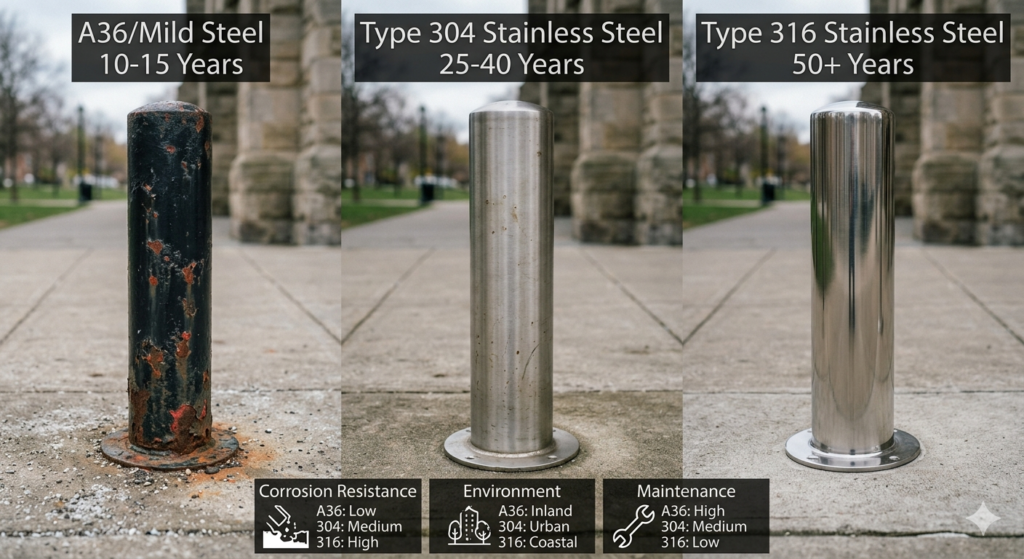
Mild steel is often utilized for standard applications due to its weldability and cost-effectiveness, but it requires protective finishes to prevent rust. Powder coating is a popular finishing option that not only adds a layer of corrosion resistance but also allows for color customization to match brand identity. However, in environments exposed to moisture, road salts, or chemicals, additional treatments such as galvanization are necessary to extend the service life of the installation. Understanding these material nuances helps buyers avoid frequent replacements and maintenance costs over time.
For environments demanding superior hygiene and aesthetic appeal, a stainless steel bollard offers distinct advantages over coated mild steel variants. The high chromium content in stainless steel forms a passive oxide layer that protects against rust and staining, making it ideal for food processing plants, hospitals, and coastal areas. While the initial investment may be higher, the reduced maintenance burden and extended lifecycle make it a cost-effective choice for high-traffic areas. This material superiority is why many facility managers prefer stainless steel for visible, high-impact locations.
Ultimately, the decision on steel grade should be guided by a thorough risk assessment of the installation site. High-risk areas requiring anti-ram capabilities may need reinforced steel filled with concrete, whereas low-risk zones may utilize hollow steel versions for traffic guidance. Engaging with a specialized manufacturer allows buyers to access expert advice on which steel grades and specifications best suit their unique environmental conditions. This tailored approach ensures that every installed unit delivers optimal performance and durability throughout its service life.
3. Which Stainless Steel Bollards Offer the Best Aesthetics and Durability
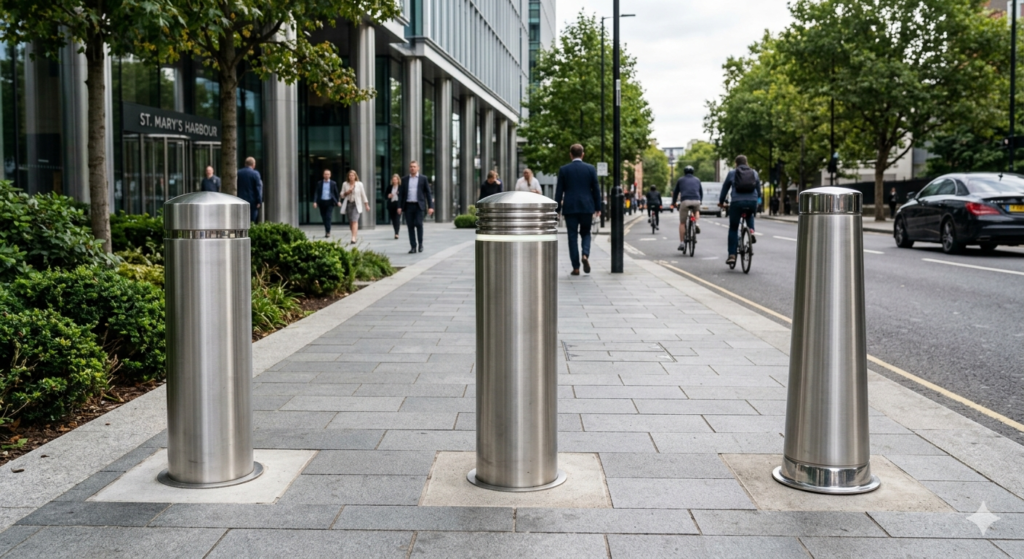
When visual appeal is as important as security, a stainless steel bollard stands out as the premier choice for architects and developers. The sleek, metallic finish of stainless steel provides a modern look that enhances the aesthetic value of office complexes, retail centers, and public plazas. Unlike painted options that may chip or fade over time, stainless steel retains its luster for years, maintaining a professional appearance with minimal upkeep. This makes it an excellent investment for businesses where image and presentation are critical components of the brand identity.
The durability of stainless steel makes it particularly suitable for harsh environments where traditional materials would fail quickly. Coastal regions with high salt content in the air or industrial zones with chemical pollutants require materials that resist corrosion aggressively. Stainless steel grades such as 304 and 316 are specifically engineered to handle these challenges, ensuring that the structural integrity of the bollard remains intact. By choosing these high-grade materials, property owners avoid the cycle of rust and repainting that often plagues lesser-quality installations.
Customization options for stainless steel units have expanded significantly, allowing businesses to align security features with specific design themes. Manufacturers now offer options for laser-cut logos, decorative sleeves, and unique dome or flat tops that add a touch of elegance to the functional barrier. This level of customization is particularly beneficial for luxury retail establishments and corporate campuses seeking a cohesive architectural language. The ability to tailor the appearance of security fixtures means they contribute to rather than detract from the landscape design.
Furthermore, the ease of cleaning and maintaining stainless steel makes it a hygienic option for facilities with strict sanitation standards. In sectors such as healthcare and food service, the ability to quickly sanitize surfaces without damaging the finish is a significant operational advantage. The non-porous nature of stainless steel prevents the accumulation of dirt and bacteria, supporting a cleaner environment. This combination of low maintenance, high durability, and visual superiority solidifies its position as the top choice for high-end commercial applications.
4. Why Customization Is Essential for Meeting Specific Project Requirements
Off-the-shelf solutions do not always address the unique challenges faced by commercial and industrial sites, making customization a vital aspect of procurement. Every facility has specific dimensions, traffic patterns, and aesthetic requirements that standard products may not fully accommodate. Custom manufacturing allows for precise adjustments in height, diameter, and wall thickness to ensure the bollard performs exactly as needed. This precision is crucial for tight urban environments or specialized industrial zones where standard dimensions might obstruct operations or fail to provide adequate protection.
Beyond physical dimensions, customization extends to the functional features of the security bollard system. Businesses can choose between removable, retractable, or fixed models depending on their access control needs. For instance, delivery areas might benefit from removable bollards that allow heavy trucks temporary access while maintaining security at other times. Integrating these specific features during the manufacturing process guarantees a seamless fit with the site’s operational workflow, rather than forcing a retrofit that could compromise functionality or security.
Branding opportunities are significantly enhanced through customization, allowing companies to turn safety features into marketing assets. Custom powder coating colors enable businesses to match bollards to their corporate color palette, reinforcing brand identity throughout the property. Additionally, companies can opt for custom insignia or reflective strips that increase visibility at night while displaying the company logo. This dual function of safety and branding is particularly valuable for retail chains and franchises looking to maintain a consistent visual identity across multiple locations.
Working directly with a manufacturer that offers bespoke solutions also ensures that the final product complies with all relevant local and federal safety codes. Custom projects often involve detailed engineering reviews to verify load-bearing capacities and impact resistance ratings. This rigorous attention to detail provides peace of mind to project managers and stakeholders, knowing that the installed barriers are fit for purpose. Prioritizing customization ensures that the investment delivers maximum returns in terms of security, compliance, and brand cohesion.
5. How Buying Steel Bollards Wholesale Optimizes Budget and Logistics
For large-scale projects, purchasing a steel bollard wholesale offers significant financial advantages over buying individual units. Wholesale pricing structures are designed to provide cost savings that increase with volume, allowing developers and contractors to allocate budget more efficiently. These savings can be substantial when outfitting large industrial complexes, parking lots, or municipal parks where dozens or hundreds of units are required. Reducing the per-unit cost directly impacts the project’s bottom line, freeing up capital for other critical infrastructure or security enhancements.
Beyond the direct cost savings, wholesale procurement streamlines the supply chain and logistics of large installation projects. Ordering a bulk shipment ensures that all materials arrive on-site simultaneously, preventing delays caused by backorders or staggered deliveries. This synchronization is vital for keeping construction schedules on track and avoiding labor idle time. Furthermore, dealing with a single supplier for the entire volume simplifies invoicing, quality control, and accountability, reducing the administrative burden on project managers.
Wholesale buyers often benefit from priority access to manufacturing slots and inventory, which is crucial in a market facing supply chain fluctuations. In 2025, industry projections indicate that demand for raw steel and fabricated security products will continue to rise, potentially leading to longer lead times for spot orders. By establishing a wholesale relationship, businesses secure their place in the production queue, ensuring that their timelines are met regardless of market volatility. This reliability is a key component of successful project management in the construction and security sectors.
Additionally, wholesale partnerships often unlock value-added services such as custom engineering support, flexible payment terms, and extended warranty options. Suppliers value long-term relationships and are more willing to accommodate specific requests to maintain the partnership. This collaborative approach can lead to better product solutions and a smoother procurement process from initial design to final delivery. Consequently, businesses that leverage wholesale purchasing models position themselves for greater operational efficiency and financial stability.
6. Which 2025 and 2026 Market Trends Influence Bollard Procurement
The market for physical security products is undergoing significant changes as we move through 2025 and look toward 2026. One major trend is the increased integration of technology into traditional security infrastructure, often referred to as the “smart city” initiative. While a traditional steel bollard provides a physical block, newer models are being designed to accommodate sensors, lighting, and surveillance technology. This shift requires buyers to consider future-proofing their investments by choosing products that can integrate with evolving digital security ecosystems.
Another critical trend is the rising emphasis on sustainable and eco-friendly construction materials, driven by stricter environmental regulations and corporate ESG goals. Market insights for 2026 suggest a surge in demand for steel products made from recycled materials and finished with non-toxic, low-VOC coatings. Buyers in the commercial and industrial sectors are increasingly vetting suppliers based on their environmental certifications and manufacturing processes. This focus on sustainability means that sourcing products from responsible manufacturers is becoming a key differentiator in the bidding process for large contracts.
Statistics from the construction industry indicate a robust growth trajectory for infrastructure development, particularly in the logistics and warehousing sectors. As e-commerce continues to expand, the need for secure loading docks and facility perimeters drives the demand for heavy-duty security bollards. Analysts predict that the global market for perimeter security will see a compound annual growth rate (CAGR) of over 5% through 2026. This growth underscores the importance of locking in supplier contracts early to avoid price hikes and material shortages as demand peaks.
Furthermore, insurance companies are increasingly influencing security standards by offering premium reductions to properties that install certified crash-rated systems. This financial incentive is driving more businesses to upgrade from simple concrete posts to engineered steel solutions that meet ASTM or DOS impact ratings. Understanding these market forces allows buyers to anticipate future requirements and make procurement decisions that offer long-term financial and security benefits. Staying ahead of these trends ensures that a business’s security infrastructure remains compliant and effective.
7. Why Professional Installation Ensures Maximum Performance of Security Bollards
The effectiveness of even the highest quality steel bollard is heavily dependent on the quality of the installation. An improperly installed unit may fail to provide the rated impact resistance, rendering the security investment useless. Professional installers understand the critical importance of depth, concrete curing times, and substrate preparation to ensure the bollard remains anchored during impact. They assess the soil conditions and existing underground utilities to determine the most effective installation method, preventing structural failures before they occur.
Different installation methods, such as submerged concrete footing or surface mounting with chemical anchors, offer varying levels of protection and suitability for different environments. Professionals can determine whether a project requires a core drill through existing asphalt or a new pour for deeper foundational support. This expertise is particularly relevant for security bollards designed to stop vehicle ramming, as the energy transfer relies entirely on the foundation. Relying on experienced installers guarantees that the system performs exactly to its engineering specifications.
Compliance with local building codes and ADA (Americans with Disabilities Act) regulations is another critical aspect that professional installation teams manage effectively. Bollards must be placed to allow safe passage for pedestrians, including those using wheelchairs, without compromising the security perimeter. Incorrect spacing or placement can result in costly fines and the expense of rework to bring the site up to code. Professional teams are well-versed in these regulations and ensure that the layout serves both security and accessibility needs seamlessly.
Finally, utilizing a professional installation service often includes warranties on workmanship, providing an added layer of protection for the investment. Should a defect arise related to the installation process, the business is covered for repairs or replacements without incurring additional costs. This assurance is invaluable for facility managers who need guaranteed performance and longevity from their security infrastructure. Therefore, pairing high-quality manufactured products with expert installation is the definitive strategy for maximizing the lifecycle and efficacy of the system.
8. How to Choose the Right Partner for Custom and Wholesale Steel Bollards
Identifying a manufacturer that truly understands the balance between security, aesthetics, and manufacturing capacity is the first step in a successful project. The ideal partner should possess a comprehensive portfolio demonstrating their ability to deliver both standard and customized solutions at scale. Buyers should look for evidence of advanced manufacturing capabilities, such as robotic welding and automated powder coating lines, which ensure consistency and quality across large orders. A manufacturer with robust infrastructure is better equipped to handle wholesale demands without compromising on delivery schedules or product integrity.
Communication and customer service are equally important factors when selecting a supplier for specialized security products. The partner should be willing to engage in detailed consultations to understand the specific site challenges and functional requirements of the business. They should act as an engineering consultant, offering recommendations on materials, finishes, and installation methods that enhance the project’s outcome. A responsive supplier who values transparency will keep the buyer informed throughout the production process, from raw material acquisition to final shipping.
Evaluating the supplier’s commitment to quality control and compliance with international safety standards is non-negotiable. Businesses should request documentation regarding crash testing, material certifications, and load ratings to verify that the products meet necessary safety criteria. A reputable manufacturer will have no qualms about providing these certificates and will often proactively showcase their compliance as a competitive advantage. This due diligence is essential for mitigating risk and ensuring that the installed barriers provide the intended level of protection.
Finally, consider the logistical capabilities of the supplier, particularly their ability to handle complex shipping requirements for wholesale orders. The right partner will have established relationships with freight carriers and experience in navigating international or domestic shipping regulations. They should offer flexible shipping solutions that align with the project’s timeline, whether it requires just-in-time delivery or phased shipments. By choosing a partner with end-to-end capabilities in manufacturing, customization, and logistics, businesses ensure a seamless procurement process that delivers superior security solutions.
Conclusion
Steel bollards represent a critical intersection of safety, design, and operational efficiency for commercial and industrial properties. From the robust protection of a high-security bollard to the sleek finish of a stainless steel variant, the options available today allow for tailored solutions that meet the exacting demands of modern infrastructure. By focusing on wholesale procurement and customization, businesses can achieve significant cost savings while ensuring that every installation aligns perfectly with their specific site requirements and brand identity. As market trends evolve through 2025 and 2026, prioritizing quality materials and expert installation will remain the cornerstone of effective asset protection.
To secure your property with the highest standards of durability and design, consider partnering with a manufacturer who specializes in bespoke steel solutions. Contact our team today to discuss your wholesale needs and discover how our customizable steel bollards can enhance the safety and value of your next project.
Frequently Asked Questions
1. What is the primary difference between a standard steel bollard and a stainless steel bollard?
The primary difference lies in corrosion resistance and aesthetic finish. A standard steel bollard, typically made of mild steel, requires a protective coating such as powder coating or galvanization to prevent rust. In contrast, a stainless steel bollard contains chromium which forms a passive layer of protection against the elements, making it highly resistant to rust and staining without the need for paint. Stainless steel is often chosen for architectural applications where a sleek, metallic look is desired, while standard painted steel is frequently used for high-traffic industrial zones where cost-effectiveness and heavy-duty protection are priorities.
2. How do I determine if I need a security bollard or a traffic guide?
The decision depends on the level of risk and the intended function of the perimeter. A security bollard is engineered and crash-tested to stop vehicles intentionally, often used to protect storefronts, government buildings, and sensitive infrastructure from ram-raiding attacks. Traffic guides, on the other hand, are designed to delineate lanes and prevent accidental low-speed impacts in parking lots and warehouses. Assessing the threat level—whether it is hostile vehicle mitigation or simply managing daily traffic flow—will dictate the specific impact rating and structural depth required for the installation.
3. What customization options are available for wholesale steel bollard orders?
Wholesale buyers have access to a wide array of customization options to align with specific project requirements and brand identity. These include selecting custom dimensions for height and diameter, choosing from a vast spectrum of RAL colors for powder coating, and adding decorative elements such as logos or laser-cut sleeves. Additionally, functional customization involves selecting specific cap styles (flat, domed, or angled) and integrating features like removable locking mechanisms or internal lighting. This flexibility ensures that the bulk order meets precise operational needs and aesthetic goals.
4. Why is buying steel bollards wholesale more cost-effective than retail purchasing?
Purchasing steel bollards wholesale significantly reduces the cost per unit through volume-based pricing structures, which is critical for large-scale commercial developments or municipal projects. Beyond the direct savings on materials, wholesale procurement optimizes logistics by consolidating shipping and reducing administrative overhead associated with multiple orders. Furthermore, establishing a wholesale relationship with a manufacturer ensures priority production scheduling, preventing project delays and providing access to bulk inventory that might not be available to smaller, retail buyers.
5. Can a stainless steel bollard be used in coastal or high-moisture environments?
Yes, a stainless steel bollard is ideally suited for coastal or high-moisture environments due to its superior corrosion resistance. Grades such as 304 and 316 stainless steel are specifically designed to withstand the corrosive effects of salt spray, humidity, and industrial chemicals. Unlike coated steel which may chip and rust, stainless steel maintains its structural integrity and appearance with minimal maintenance, making it a long-term cost-saving solution for marinas, waterfront properties, and facilities located in harsh climates.
6. What are the market trends for steel bollards in 2025 and 2026?
Industry forecasts for 2025 and 2026 indicate a strong shift toward “smart” perimeter security and sustainable manufacturing. Trends include the integration of technology into bollards, such as sensors and automatic rising bollards connected to smart city traffic management systems. Additionally, there is a growing demand for eco-friendly products made from high-recycled-content steel and finished with low-VOC coatings. Buyers are also prioritizing crash-rated products driven by stricter insurance requirements and a heightened focus on anti-terror infrastructure in urban planning.
7. How does the installation method affect the performance of a security bollard?
The installation method is the most critical factor in ensuring a security bollard achieves its rated impact resistance. Simply surface-bolting a bollard is insufficient for high-security applications; instead, deep-embedment foundations into concrete with proper rebar reinforcement are required to transfer impact energy into the ground. Professional installation ensures the correct depth and soil compaction are achieved. If the foundation is inadequate, even the strongest steel bollard will fail upon impact, making professional engineering and installation essential for safety compliance.
8. What is the lead time for a custom wholesale order of steel bollards?
Lead times for custom wholesale orders vary based on the complexity of the customization and current raw material market conditions. Generally, standard powder-coated steel bollards can be produced and shipped within a few weeks, while highly customized stainless steel bollards or those with specific architectural features may take longer. Given the projected rise in steel demand for 2025 and 2026, it is advisable for project managers to engage suppliers early in the planning phase to secure production slots and ensure timely delivery.
9. Are removable steel bollards as secure as fixed bollards?
Removable steel bollards provide a balance between security and access control, though their resistance level depends on the locking mechanism and receptacle design. While they offer excellent protection against accidental vehicle impacts when locked in place, they may not provide the same level of anti-ram protection as a fixed, deeply embedded bollard. For high-security threats, fixed models are recommended. However, for areas requiring occasional access for delivery or emergency vehicles, high-quality removable versions offer sufficient security without compromising the operational flexibility of the site.
10. How can I ensure the steel bollards I purchase meet safety compliance standards?
To ensure compliance, buyers should verify that the products have been tested and certified to relevant industry standards such as ASTM, PAS, or DOS for crash ratings. When dealing with wholesale manufacturers, request detailed documentation regarding material grade, structural integrity, and impact performance. Additionally, ensuring that the installation adheres to ADA (Americans with Disabilities Act) standards for spacing and protrusion is vital for accessibility. Partnering with a reputable supplier who provides comprehensive data sheets and warranty information guarantees that the bollards meet all legal and safety requirements.