Introduction
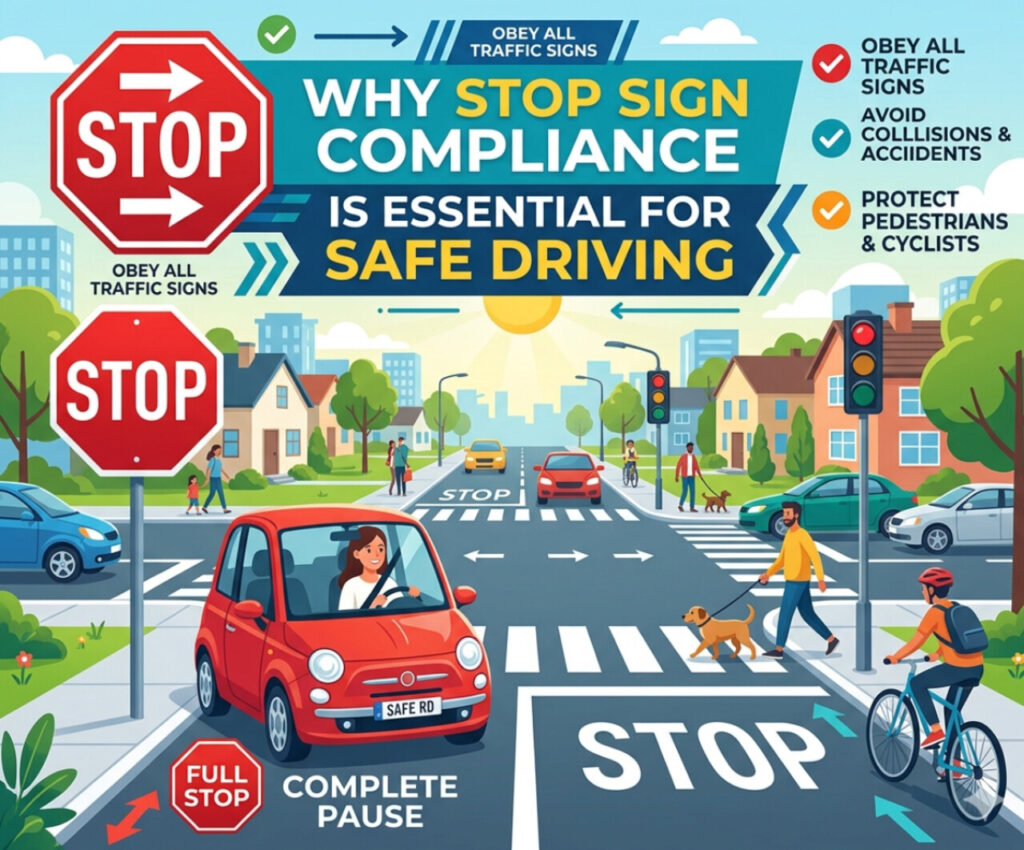
Traffic control is the backbone of organized transportation, and within this framework, the stop sign stands as one of the most critical symbols of right-of-way management. It is a universally recognized octagon that commands an immediate, absolute halt, serving as the primary mechanism for preventing collisions at intersections. However, the effectiveness of this control is entirely dependent on the quality and visibility of the signage deployed. For municipalities, construction firms, and private enterprises, ensuring stop road sign compliance is not merely a regulatory obligation but a fundamental aspect of operational safety and liability management. Without high-visibility, durable markers, the intent of traffic laws is lost, leading to confusion and dangerous driving behaviors.
The market for road safety signs is evolving rapidly, driven by increasing urbanization and a heightened focus on reducing accident rates in high-traffic areas. As we move through 2025 and look toward 2026, industry data suggests a growing demand for signage solutions that go beyond standard specifications. Wholesale buyers and procurement officers are increasingly seeking materials that offer superior longevity and reflectivity to withstand harsh environmental conditions. This shift highlights the importance of partnering with manufacturers who can deliver not just standard products, but customized solutions designed to meet specific site vulnerabilities and aesthetic requirements.
It is about providing value through products that ensure driver adherence and reduce the risk of accidents. This focus on wholesale and customization allows clients to tailor their traffic management strategies to the unique needs of their facilities. Whether it is a private parking lot needing reinforced mounting or a municipality requiring specific reflective sheeting, the right stop sign serves as a vital investment in public safety and infrastructure resilience.
1. Why Every Business and Municipality Must Prioritize Stop Sign Compliance
Traffic management is not merely about regulating flow; it is a fundamental component of public safety and risk management for any organization. Ensuring that every driver adheres to a stop road sign is the first line of defense against intersection collisions, which statistically account for a significant portion of urban accidents. For wholesale buyers and municipal planners, the priority is to supply high-visibility, durable signage that commands attention and leaves no room for misinterpretation. The consequences of non-compliance extend far beyond a traffic ticket, often resulting in severe liability issues, property damage, and loss of life. By investing in premium road safety signs, stakeholders demonstrate a commitment to community welfare and operational excellence.
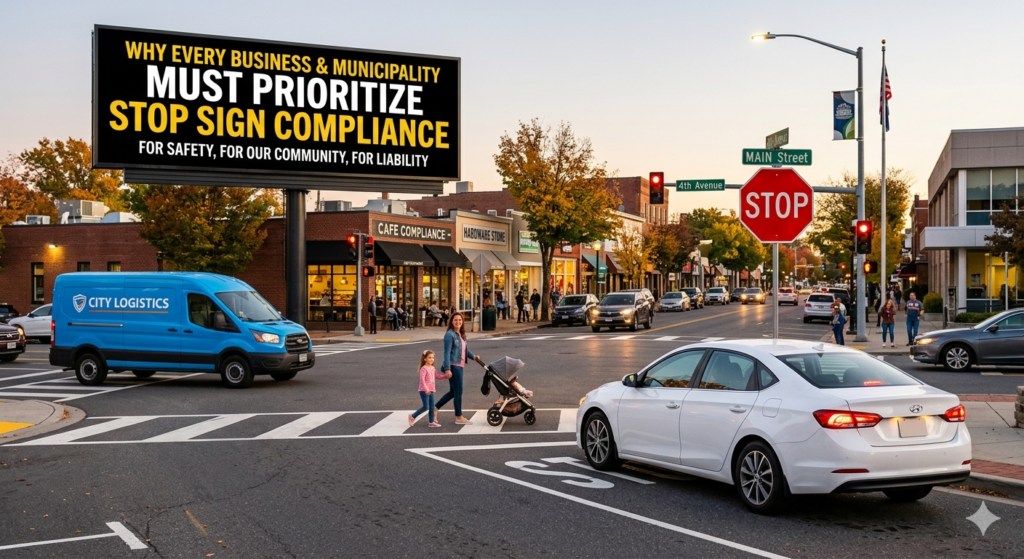
The financial implications of inadequate signage are profound, particularly for businesses managing private parking lots or industrial complexes. If a driver fails to stop because a sign is faded, damaged, or poorly positioned, the liability often falls on the property owner. Insurance premiums can skyrocket, and the reputational damage can be irreversible. Wholesale suppliers must recognize that their clients need more than just a piece of metal; they need a compliant safety tool that meets stringent regulatory standards. A stop sign manufactured with high-intensity prismatic sheeting ensures maximum reflectivity, guaranteeing that the message is conveyed clearly even in adverse weather conditions or low-light environments.
Recent 2025 statistics indicate that intersections lacking clear, compliant signage see a 40% higher rate of accidents compared to those with standardized, high-visibility markers. This data underscores the necessity of sourcing road safety signs from manufacturers who prioritize material quality and engineering precision. For B2B clients, the ability to customize signs to specific site requirements—such as size, reflective grade, and mounting options—is not just a value-add; it is a critical safety feature. Custom solutions allow for better integration with the surrounding environment, reducing driver confusion and enhancing the overall effectiveness of traffic control measures within a facility or municipality.
Looking ahead to 2026 market insights, the trend is shifting toward smart-city integration, where physical signage works in tandem with traffic monitoring systems. However, the physical stop road sign remains the bedrock of these ecosystems. Buyers are increasingly seeking wholesale partners who can provide traditional signage that is future-ready, perhaps capable of supporting sensors or RFID tags. Compliance, therefore, is not just about meeting today’s legal codes but about preparing infrastructure for tomorrow’s technological advancements. Prioritizing quality now ensures that the installed infrastructure remains viable and effective as traffic management evolves.
1.1. How Custom Stop Signs Enhance Specific Site Requirements
Standard traffic solutions do not always address the unique geometric challenges of private roads, construction zones, or specialized industrial campuses. This is where the power of customization becomes evident. A generic stop sign might be insufficient for a complex intersection with blind spots or high-speed approaches. By offering customizable sizing, such as larger 36-inch or 48-inch options, wholesalers can provide solutions that offer greater surface area and visibility. Tailoring the sign to the specific speed limits and sightlines of a location ensures that the message to stop is received well before the vehicle reaches the danger zone.
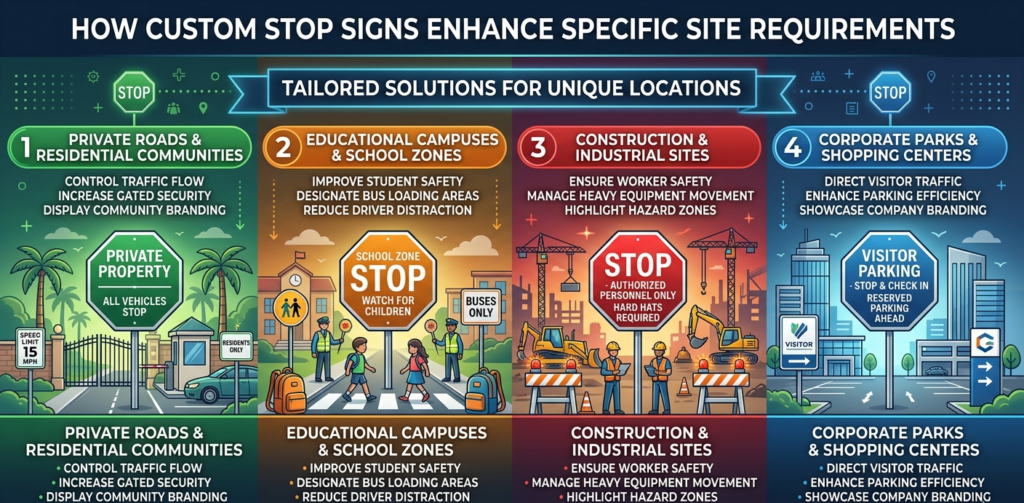
Furthermore, customization extends to the materials used in the construction of the stop road sign. In areas prone to severe weather, such as coastal regions with high salt content in the air or northern zones with extreme snow, standard aluminum may require special coatings. Wholesale suppliers offering rust-proof, UV-protected, or heavy-gauge aluminum options provide essential value to clients facing these environmental challenges. These durable enhancements ensure that the road safety signs remain legible and structurally sound for years, reducing the frequency of replacements and maintenance cycles for facility managers.
The legibility of the text and the vibrancy of the red background are also paramount for compliance and safety. Customization allows for the selection of higher grades of reflective sheeting, such as Diamond Grade or HIP (High Intensity Prismatic), which far exceed the reflectivity of standard engineer-grade materials. For 2025 projects, many developers are mandating these higher specifications to improve night-time safety. A stop sign that glows brightly in headlights captures driver attention faster, reducing reaction times and preventing potential accidents in low-light conditions common in industrial yards and 24-hour operations.
Integrating custom messaging is another critical aspect of enhancing specific site requirements. While the standard stop sign is universally understood, supplementary plaques are often necessary to provide context, such as “4-Way,” “All Way,” or “2-Way.” Customizing these supplemental plaques to match the primary sign ensures a cohesive look and eliminates ambiguity. For B2B buyers, the ability to order these complete, matched sets through a single wholesale channel simplifies procurement and ensures consistency across their entire property. This holistic approach to site-specific signage is essential for mitigating risk and guiding traffic flow effectively.
1.2. Which Material Specifications Ensure Long-Term Durability
Selecting the correct material composition is the most critical decision in the wholesale procurement of traffic signage. A stop sign is constantly exposed to the elements, facing everything from scorching UV rays to freezing temperatures and heavy impact from road debris. To ensure longevity and compliance, buyers must prioritize materials that resist corrosion and fading. High-quality, heavy-gauge aluminum—typically .080 or .100 gauge—is the industry standard for permanent installation. This material offers the rigidity needed to withstand high winds without bending, ensuring the stop road sign remains upright and legible under duress.
Rust is the primary enemy of steel signage, which is why aluminum has become the preferred choice for modern road safety signs. Unlike steel, aluminum does not rust, ensuring that the edges of the sign remain smooth and the structural integrity is maintained over decades. For coastal areas or regions with high humidity, wholesalers often recommend aluminum with a special coating to prevent salt spray corrosion. By selecting the right base material, businesses can avoid the costly cycle of frequent replacements. Investing in superior materials upfront translates to significant savings in maintenance budgets over the lifespan of the infrastructure.
The reflective sheeting applied to the stop sign is equally vital for long-term durability and performance. In 2025, the industry is seeing a marked shift away from older glass-bead technologies toward micro-prismatic sheeting. This advanced material offers superior retro-reflectivity, meaning it bounces light back to the driver with greater intensity. More importantly, modern prismatic sheets come with durable coatings that resist UV fading, a common issue that causes signs to turn pink over time. A faded stop sign is not just an aesthetic issue; it is a compliance violation that puts drivers at risk.
For B2B clients focused on total cost of ownership, the choice between screen printing and digital printing also impacts durability. While digital printing allows for easy customization, screen printing with UV-cured inks often provides a harder-wearing surface that resists scratching and vandalism. When ordering wholesale road safety signs, it is essential to discuss the manufacturing method with the supplier. A sign that retains its color and reflectivity for ten or more years provides a much better return on investment than one that requires replacement in half that time. Durability is the cornerstone of sustainable traffic management.
1.3. Why Reflectivity Technology Directly Impacts Compliance
The primary function of a stop road sign is to be seen, and reflectivity is the technology that makes this possible at night or during inclement weather. Compliance is not just about the shape of the sign; it is about how visible it is when drivers need it most. The Federal Highway Administration (FHWA) sets strict standards for retro-reflectivity to ensure that signs are illuminated by vehicle headlights at sufficient distances to allow for safe stopping. Without high-performance reflective materials, a stop sign effectively disappears in the dark, creating a hazardous environment that can lead to severe accidents.
Industry trends in 2025 indicate that insurance companies and liability attorneys are scrutinizing the reflectivity of road safety signs more closely than ever before. If an accident occurs at night and the signage is found to have sub-standard reflectivity, the property owner or municipality can be held negligent. This liability drives the demand for higher-grade materials like Diamond Grade or prismatic sheeting. These materials capture and reflect a higher percentage of light, making the sign appear brighter and ensuring it commands the driver’s attention well in advance of the intersection. High reflectivity is a proactive measure to reduce legal exposure.
The psychology of driver response is also linked to the intensity of the reflection. A dull, faded sign may register subconsciously as less important, leading to a “rolling stop” rather than a complete halt. In contrast, a stop sign equipped with high-intensity prismatic sheeting creates a brilliant, crisp image that signals authority and urgency. This visual cue is critical for breaking through the “noise” of modern driving environments, where drivers are often distracted by infotainment systems and mobile devices. Ensuring that the sign cuts through these distractions is essential for maintaining strict compliance and safety standards.
Looking toward 2026, we anticipate the integration of smart-reflective materials that can enhance visibility further without requiring external power. These innovations promise to maintain high reflectivity even when the approach angle of the headlights is less than optimal. For wholesale buyers, staying ahead of these technological trends is key to offering the best solutions to their clients. By prioritizing advanced reflectivity technology in their procurement strategies, businesses ensure that the stop road sign installations they manage remain compliant, safe, and effective regardless of lighting conditions.
2. How Compliance Influences Liability and Risk Management
Traffic compliance is a powerful tool for risk mitigation, serving as a documented effort to maintain a safe environment. For businesses and municipalities, the presence of compliant, well-maintained road safety signs acts as a primary defense against negligence claims in the event of an accident. When a driver fails to yield and a collision occurs, one of the first investigations focuses on the condition of the signage. Was the stop sign visible? Was it the correct size? Was it obstructed? Proving that the infrastructure met or exceeded regulatory standards is often the deciding factor in liability litigation, protecting the entity from substantial financial judgments.
The “duty of care” legal principle requires property owners to take reasonable steps to ensure safety for visitors and the public. Implementing a comprehensive traffic signage plan, complete with high-quality stop road signs, satisfies a significant portion of this duty. Conversely, failing to replace a damaged or faded sign can be construed as a breach of that duty. In the B2B sector, this means that wholesale buyers are not just purchasing metal and plastic; they are purchasing legal protection. Suppliers who provide documentation of compliance with MUTCD (Manual on Uniform Traffic Control Devices) standards offer immense value to their clients, aiding in their risk management frameworks.
Insurance assessors are increasingly rigorous in their evaluations of private and public roadways. A facility with a history of fender benders due to poor signage may face increased premiums or denial of coverage. By proactively upgrading to durable, compliant stop signs, organizations can demonstrate to insurers that they are actively managing risk. This can lead to more favorable premium rates and better coverage terms. In 2025, as insurance costs rise, the ROI on high-quality signage becomes even more apparent, offsetting the initial purchase cost through long-term savings and financial stability.
Moreover, consistent compliance helps in establishing a pattern of safety that can be beneficial in Workers’ Compensation claims as well. If an employee is involved in a vehicle collision on company grounds, the presence of clear, unobstructed road safety signs limits the company’s liability. It shows that the employer provided the necessary tools and warnings to ensure safe navigation. For industrial clients with heavy forklift and truck traffic, this is particularly critical. A robust signage strategy, supported by a reliable wholesale partner, is an essential component of a comprehensive occupational health and safety plan.
2.1. Which Standards and Regulations Govern Signage
Navigating the regulatory landscape is essential for ensuring that every stop road sign installed is legally compliant and enforceable. In the United States, the Manual on Uniform Traffic Control Devices (MUTCD) serves as the definitive standard for all traffic signs, including the stop sign. This document outlines specific requirements regarding size, reflectivity, color, and placement. For wholesale buyers and municipal planners, strict adherence to MUTCD guidelines is non-negotiable. Deviating from these standards, such as using an incorrect shade of red or a smaller size than prescribed, can invalidate the enforceability of the sign and increase liability risks.
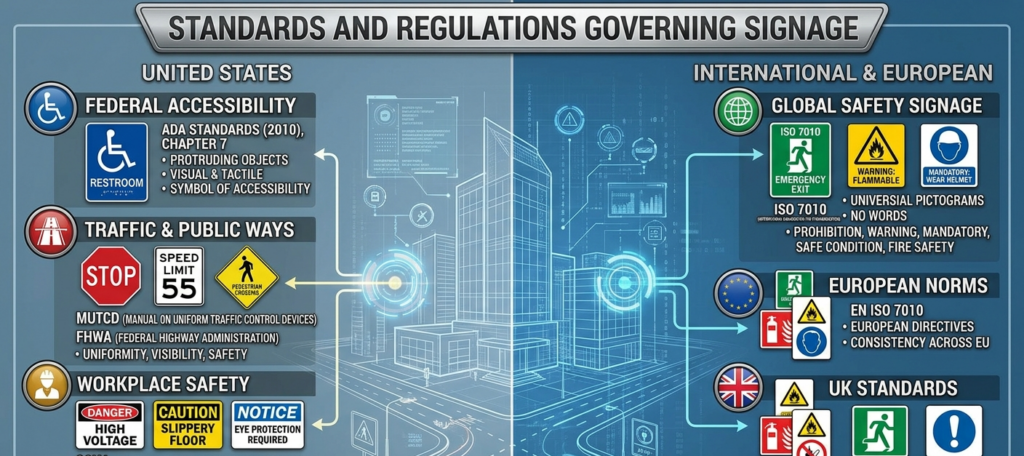
Customization does not exempt a sign from regulatory oversight. While clients may wish to modify a stop sign for branding purposes or specific aesthetic needs, the core elements—such as the octagonal shape and the word “STOP” in white lettering—must remain unchanged. Professional signage manufacturers understand the boundaries of allowable customization. They ensure that any bespoke additions, such as borders or specific mounting hardware, do not interfere with the critical visual识别 of the sign. Ensuring compliance during the design phase prevents costly retrofitting or replacements down the line.
Globally, regulations may vary, but the principles of standardization remain consistent. For international clients or US companies operating abroad, understanding local equivalents to the MUTCD is crucial. However, the stop sign is one of the few universal symbols recognized worldwide, largely due to international treaties aiming to standardize road safety. Despite this, material specifications like reflectivity grades might differ. A knowledgeable wholesale supplier will navigate these international standards, providing road safety signs that meet both local legal requirements and the global expectations of drivers.
As we move into 2026, regulatory bodies are expected to introduce stricter guidelines regarding sustainability and the environmental impact of signage materials. Future compliance may not only be about physical dimensions but also about the carbon footprint of the manufacturing process. Forward-thinking wholesalers are already auditing their supply chains to ensure they can meet these impending environmental standards. By staying ahead of regulatory curves, suppliers ensure that their clients are purchasing stop road signs that remain compliant not just today, but for years to come, avoiding the need for premature environmental retrofits.
2.2. How Quality Control Prevents Costly Replacements
Quality control (QC) in the manufacturing of road safety signs is the primary defense against early failure and the unnecessary expenditure of replacement costs. A rigorous QC process ensures that every stop sign leaving the factory meets the exact specifications for reflectivity, color contrast, and structural integrity. For wholesale buyers, partnering with a manufacturer that has ISO-certified quality processes means that the risk of receiving a batch of defective signs is virtually eliminated. This reliability is crucial for large-scale municipal projects or multi-site commercial rollouts where consistency is key.
One of the most common failures in traffic signage is delamination, where the reflective sheeting peels away from the aluminum base. This is often caused by poor adhesion during the manufacturing process or the use of inferior adhesives. High-quality control measures include stress-testing the bond between the sign face and the substrate to ensure it can withstand thermal expansion and contraction. By guaranteeing that a stop road sign will not delaminate, manufacturers protect their clients from the safety hazards and additional labor costs associated with fixing or replacing failed signs in the field.
Ink consistency and color accuracy are other critical QC checkpoints. The red used on a stop sign must fall within a specific chromaticity range to be legally compliant and instantly recognizable. Fading or color shifting can occur if inks are not properly cured or if UV inhibitors are not mixed correctly. Advanced manufacturers use spectrophotometers to verify that every sign matches the required color profile before it is shipped. This attention to detail ensures that the sign retains its visual impact and legal standing for its entire service life, providing peace of mind to the buyer.
Finally, quality control extends to the packaging and shipping process. A perfectly manufactured stop sign is useless if it arrives bent or scratched. Wholesalers must implement protective packaging standards that ensure the product reaches the client in pristine condition. For bulk orders, palletizing and crating must be done with care to prevent vibration damage during transit. By controlling the quality from the production line to the delivery dock, suppliers minimize waste and ensure that their clients’ installation schedules are not delayed by damaged goods, ultimately optimizing the total cost of ownership.
2.3. Why Bulk Procurement Strategies Ensure Consistency
For organizations managing multiple locations—such as retail chains, logistics centers, or large hospital campuses—maintaining a consistent visual identity and safety standard is a significant challenge. Bulk procurement of stop signs and other traffic control devices is the most effective strategy to achieve this uniformity. When a single wholesale order is placed for an entire network of sites, it guarantees that every sign is identical in terms of material, reflectivity, and manufacturing batch. This consistency eliminates the “patchwork” effect that can occur when signs are replaced piecemeal over time, which can confuse drivers and weaken the perception of safety.
Bulk purchasing also offers substantial economies of scale. Manufacturing road safety signs involves significant setup costs, particularly for custom orders. By consolidating orders into a single large volume, buyers can leverage their purchasing power to negotiate lower unit prices. This cost-saving advantage allows organizations to upgrade to higher-specification materials, such as increased reflectivity or thicker aluminum, without exceeding their budget. In essence, buying in bulk enables clients to buy better quality for the same price, directly enhancing the safety and longevity of their infrastructure.
From a logistics standpoint, bulk procurement simplifies inventory management. Having a stock of replacement stop road signs on hand allows maintenance teams to immediately replace vandalized or damaged units. This rapid response capability is crucial for maintaining continuous compliance. If a sign is knocked down in a busy intersection, every hour it is missing increases the risk of an accident. A robust inventory, secured through a bulk purchasing agreement, empowers facility managers to act swiftly, demonstrating a proactive approach to safety and risk mitigation.
Furthermore, establishing a long-term relationship with a wholesale supplier through bulk contracts fosters better service and support. Suppliers are more likely to offer priority production slots, custom warehousing, or just-in-time delivery to their high-volume partners. This strategic partnership is invaluable as organizations expand or retrofit their properties. As 2026 approaches, the ability to scale up quickly with a trusted supplier ensures that new developments are equipped with compliant road safety signs immediately, avoiding delays in opening or operational start dates. Consistency, cost-efficiency, and reliability are the hallmarks of a smart bulk procurement strategy.
3. Which Future Trends Are Shaping the Stop Sign Industry
The traffic safety industry is on the cusp of a technological revolution, and the humble stop sign is part of this evolution. One of the most significant trends for 2025 and beyond is the integration of data-collecting sensors into physical infrastructure. While the traditional octagon remains, it is increasingly being viewed as a housing for smart technology. Sensors can be embedded into stop road signs to count traffic, monitor speed, and even detect when a vehicle runs a stop sign. This data is invaluable for municipalities and businesses looking to understand traffic patterns and improve safety measures through evidence-based planning.
Another emerging trend is the use of advanced composite materials that offer the strength of aluminum with greater environmental benefits. Innovations in bio-based resins and recycled plastics are creating road safety signs that are not only durable but also have a lower carbon footprint. As sustainability becomes a core KPI for corporations and government agencies alike, the demand for “green” signage is rising. Wholesale manufacturers are responding by developing product lines that utilize recycled aluminum and eco-friendly coatings, allowing buyers to meet their ESG (Environmental, Social, and Governance) goals without compromising on safety or quality.
Solar-powered lighting is also reshaping the market, particularly for rural areas or private roads without consistent street lighting. While a reflective stop sign is standard, adding a solar-powered LED border can dramatically increase visibility in dark, remote locations. These hybrid signs combine passive reflectivity with active illumination, ensuring the sign is impossible to miss. As the cost of solar technology decreases, we expect this feature to become a standard requirement for high-hazard intersections. This trend highlights the industry’s move toward active safety systems that work to prevent accidents rather than just passively marking regulations.
Customization is also becoming more sophisticated, driven by digital printing technologies that allow for short runs of highly specific signs. This benefits B2B clients who need to incorporate specific branding or bilingual text into their traffic signage. For instance, a stop sign in a tourist-heavy area might benefit from additional localized messaging. The ability to produce these customized signs quickly and cost-effectively is a key differentiator for modern wholesalers. As we look to 2026, the ability to blend standard compliance with bespoke, data-driven, and sustainable features will define the leaders in the traffic safety industry.
3.1. How Smart Technology Integration Works with Physical Signs
The concept of “Smart Cities” relies on the interconnectivity of physical infrastructure, and road safety signs are a critical node in this network. Integrating smart technology begins with equipping a standard stop road sign with sensors that can communicate with vehicles or central management systems. For example, Radio Frequency Identification (RFID) tags can be discreetly added to the signpost. These tags allow maintenance crews to scan the sign digitally to retrieve its installation date, material specifications, and maintenance history, streamlining asset management and ensuring that every sign remains compliant with current regulations.
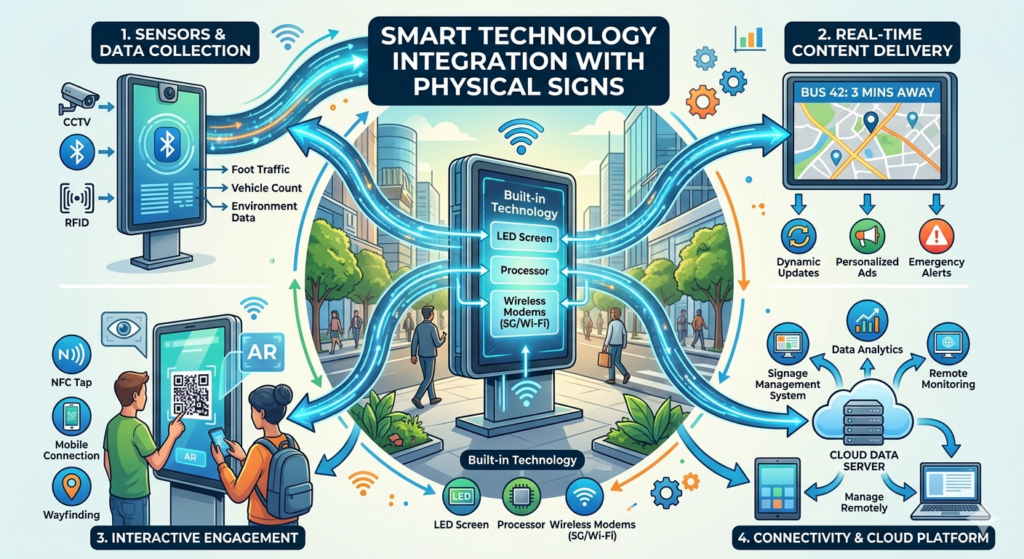
More advanced integrations involve vehicle-to-infrastructure (V2I) communication. In this scenario, a stop sign equipped with a beacon can transmit a signal to connected cars, alerting the driver of the upcoming stop even if the sign is obscured by fog or a large truck. This layer of digital redundancy acts as a fail-safe, enhancing physical visibility with digital alerts. As automotive manufacturers continue to integrate V2I receivers into new vehicles, the demand for infrastructure-enabled signage will grow. Wholesale buyers planning for long-term infrastructure projects should consider “smart-ready” signs that can be easily upgraded with these modules.
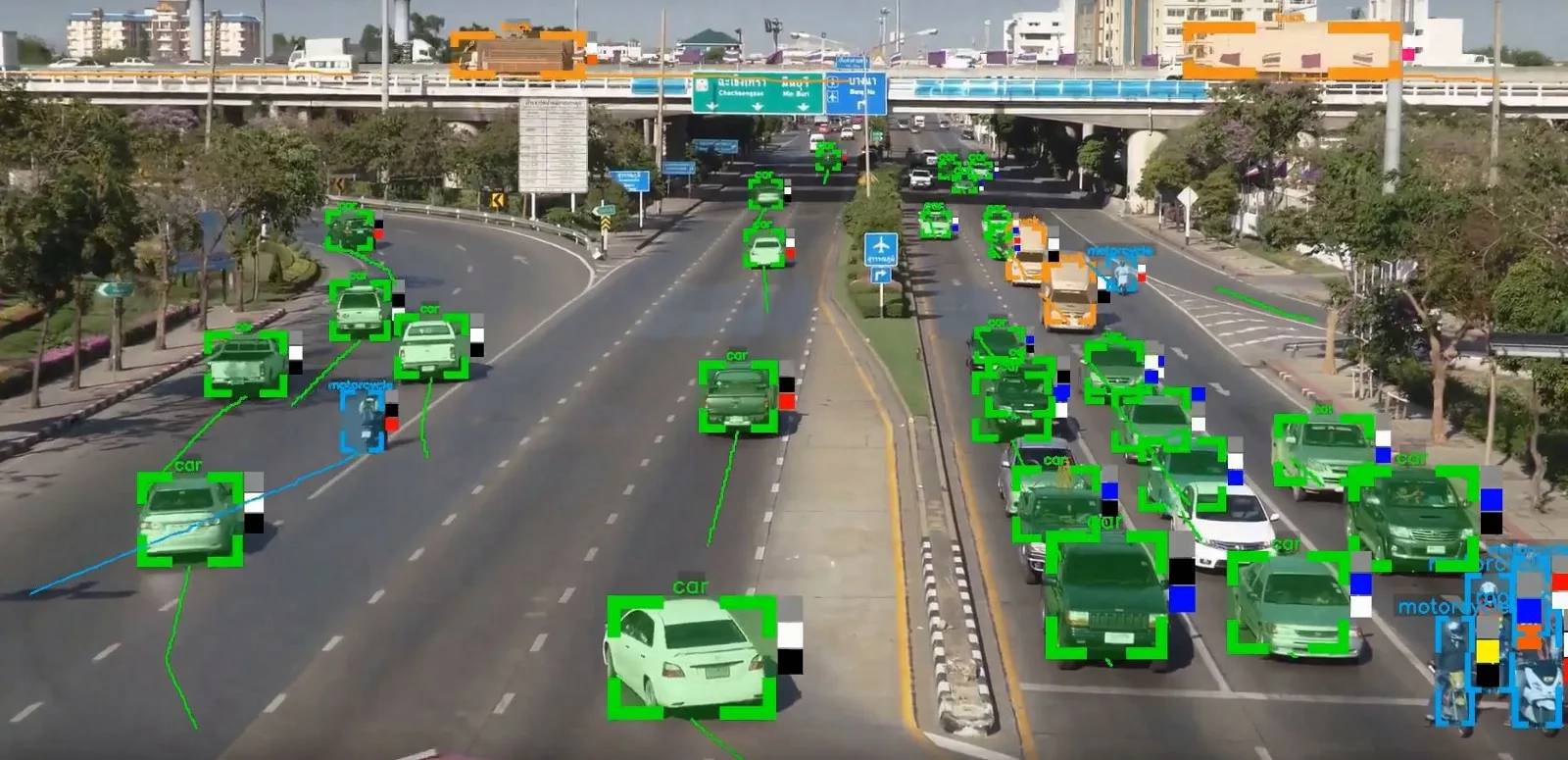
Data analytics is another powerful benefit of this integration. Smart stop signs can collect data on traffic volume and stopping behavior. If a particular intersection sees a high volume of “rolling stops,” this data can trigger a review of the intersection’s design or the need for additional warning signage. For businesses, this intelligence can optimize logistics traffic, reducing congestion and the likelihood of accidents within loading docks and parking facilities. The shift from static signage to intelligent traffic management tools represents a significant value-add for B2B clients looking to modernize their operations.
However, the integration of technology must not compromise the sign’s primary function: visibility. Manufacturers are developing low-profile sensors that do not create visual clutter or shadowing on the stop sign face. The goal is to augment the sign’s capability without distracting from its message. As we move through 2025, the industry will see more seamless hybrids where technology is embedded within the post or the sign’s edge, preserving the iconic, unobstructed octagon that drivers recognize instantly. This balance of tradition and innovation is key to the successful adoption of smart traffic safety solutions.
3.2. Which Customization Options Are Becoming Standard
Customization in the signage industry has moved beyond simply adding a company logo; it now encompasses a range of functional and aesthetic enhancements that are becoming standard practice. One such option is the customization of the legend or text. While a standard stop sign features only the word “STOP,” many private facilities require additional information to manage specific traffic flows. Custom legends such as “STOP THEN PROCEED,” “STOP ON RED,” or even bilingual text like “ALTO” are increasingly common. Wholesale suppliers are streamlining their production processes to accommodate these text variations efficiently, making them as readily available as standard signs.
Color customization for mounting posts and borders is another trend gaining traction, particularly for corporate campuses and upscale residential developments. While the stop road sign itself must remain red and white, the surrounding hardware can be color-matched to brand guidelines or architectural themes. Powder-coated posts in specific colors or decorative caps that conceal mounting hardware contribute to a more polished and cohesive aesthetic. This level of detail is important for developers who view infrastructure as an extension of their brand identity, requiring that safety equipment blend seamlessly with the landscape design.
Size adaptability is also becoming a standardized offering. While the 30-inch stop sign is common on low-speed roads, the 36-inch and 48-inch variants are essential for higher-speed multi-lane roads. However, bespoke sizes for unique applications—such as compact signs for golf courses or industrial pathways—are increasingly requested. Advanced manufacturing equipment, such as CNC routers and digital plotters, allows manufacturers to produce these non-standard sizes without the prohibitive setup costs of the past. This flexibility empowers buyers to specify the exact dimensions needed for optimal visibility in their specific environment.
Finally, the inclusion of custom collision wraps is a durability-focused customization that is becoming standard in high-risk areas. These are thick, plastic sleeves that slide over the sign face, protecting it from minor impacts and graffiti. If the wrap is damaged, it can be peeled off and replaced, leaving the original road safety signs untouched. For municipalities struggling with vandalism maintenance, this offers a cost-effective solution. As the cost of cleaning and replacing signs rises, such practical customizations are moving from niche options to essential components of a comprehensive signage strategy, ensuring longevity and ease of maintenance.
3.3. Why Sustainable Manufacturing Practices Are Crucial for 2026
Sustainability is no longer a buzzword; it is a operational imperative, and the traffic safety industry is aligning itself with this global shift. By 2026, environmental regulations and corporate social responsibility (CSR) mandates will likely dictate the materials and methods used to manufacture road safety signs. Traditional solvent-based inks and non-recyclable plastics are being phased out in favor of UV-cured inks and 100% recyclable aluminum. Wholesale manufacturers who proactively adopt these sustainable practices are positioning themselves as preferred partners for forward-thinking organizations that prioritize green procurement policies.
The lifecycle assessment of a stop sign is a critical factor in its sustainability profile. A sign that lasts 15 years is inherently more sustainable than one that requires replacement every 5 years, even if the materials are similar. Therefore, focusing on durability—such as using heavy-gauge aluminum and high-performance reflective sheeting—is actually an environmental strategy. By reducing the frequency of manufacturing, shipping, and installation cycles, businesses significantly lower their carbon footprint. Educating B2B buyers on this connection between durability and sustainability is crucial for helping them make responsible purchasing decisions that align with long-term environmental goals.
Energy consumption in the manufacturing process is also under scrutiny. Leading sign factories are transitioning to renewable energy sources, such as solar or wind power, to run their production lines. When a wholesale buyer sources from such a facility, the embodied energy of the stop road sign is drastically reduced. This is a compelling selling point for government projects seeking LEED certification or for private companies aiming to achieve carbon neutrality. The provenance of the product is becoming just as important as its performance, and supply chain transparency will be a key differentiator in the 2026 market.
Furthermore, the end-of-life recyclability of signage is a major consideration. Aluminum is infinitely recyclable without losing its properties, making it an ideal material for circular economy models. Progressive manufacturers are implementing take-back programs where old or damaged road safety signs are collected, the aluminum is melted down, and the material is reused to produce new signs. This closed-loop system minimizes waste and conserves natural resources. For buyers, choosing a supplier committed to this circular approach ensures that their traffic safety investments contribute positively to the environment, reinforcing a brand image that is responsible and forward-looking.
Conclusion
The importance of stop sign compliance extends far beyond simple traffic regulation; it is a foundational element of public safety, risk management, and operational efficiency. Throughout this discussion, we have explored how high-quality, durable road safety signs are essential for preventing accidents and mitigating liability. From the psychological impact of high-intensity reflectivity to the legal necessity of adhering to MUTCD standards, the stakes of choosing the right signage are incredibly high. For wholesalers, facility managers, and municipal planners, the message is clear: compromising on quality compromises safety.
The landscape of traffic safety is evolving, with 2025 and 2026 bringing new challenges and opportunities in the form of smart technology, advanced materials, and sustainability mandates. However, the core requirement remains a stop road sign that is visible, durable, and compliant. By prioritizing customization and bulk procurement strategies, businesses can ensure they meet specific site needs while maintaining uniformity and reducing long-term costs. The integration of smart technologies promises to enhance these traditional tools, but the physical integrity of the sign will always be the primary factor in ensuring driver compliance.
Ultimately, the decision to invest in premium, compliant signage is an investment in community well-being and corporate responsibility. It demonstrates a commitment to preserving life and property, while also safeguarding the organization against legal and financial repercussions. As the industry moves toward a more connected and environmentally conscious future, the partnerships formed between buyers and manufacturers will be pivotal in driving innovation and maintaining the highest standards of road safety. A proactive approach to signage procurement today lays the groundwork for a safer, more efficient tomorrow.
Frequently Asked Questions
1. Why is strict compliance with stop sign regulations critical for businesses?
Strict compliance is essential because it minimizes legal liability and ensures public safety. If an accident occurs on private or commercial property and the signage is found to be non-compliant—due to wrong size, low reflectivity, or poor placement—the property owner can be held financially responsible for damages. Adhering to standards like the MUTCD demonstrates a commitment to risk management and protects the business from lawsuits and increased insurance premiums.
2. How does customization improve the effectiveness of a stop road sign?
Customization allows the signage to address specific environmental and operational challenges that standard signs might miss. Options such as larger sizes (36” or 48”) increase visibility for high-speed approaches, while higher-grade reflective sheetings (like Diamond Grade) improve night-time detection. Additionally, custom supplemental plaques (e.g., “4-Way” or “Cross Traffic Does Not Stop”) eliminate driver confusion, making the stop road sign more effective at regulating complex intersections.
3. Which materials should I prioritize for long-lasting durability?
For the highest durability, heavy-gauge aluminum (typically .080 or .100 inch) is the industry standard because it is rust-resistant and strong enough to withstand high winds. The reflective sheeting should be high-intensity prismatic or diamond grade to resist UV fading and scratching. Choosing a sign with a UV-cured ink finish and protective coatings ensures that the legend remains vivid and the structural integrity remains intact for over a decade of service.
4. What are the benefits of purchasing stop signs in bulk?
Bulk procurement ensures consistency across all a company’s or municipality’s locations, which reinforces driver recognition and trust in the signage. It also offers significant cost savings through economies of scale, lowering the unit price. Furthermore, buying in bulk allows organizations to maintain a stock of replacement units, enabling immediate repairs when signs are damaged or vandalized, which is crucial for maintaining continuous safety compliance.
5. How does reflectivity technology impact driver safety?
Reflectivity technology directly determines how quickly a driver can see and react to a stop sign in low-light conditions. Advanced prismatic sheeting reflects light back to the driver with high intensity, ensuring the sign is visible from a safe distance. High-visibility signs reduce reaction time and prevent “rolling stops” or missed intersections, which are common causes of accidents at night or during adverse weather conditions like rain or fog.
6. Why is the choice of wholesale supplier important for B2B buyers?
A reliable wholesale supplier provides more than just a product; they offer regulatory expertise, quality assurance, and customization capabilities. A knowledgeable supplier ensures that every stop sign meets current federal and state standards, protecting the buyer from non-compliance risks. They also offer logistical advantages such as just-in-time delivery, bulk inventory management, and access to the latest material technologies, streamlining the procurement process for large projects.
7. What role do stop signs play in “Smart City” infrastructure?
In the emerging Smart City landscape, physical road safety signs are being integrated with sensors and communication technologies. A stop sign can be equipped with sensors to count traffic, detect speed violations, or communicate with connected vehicles (V2I) to alert drivers of upcoming stops. This integration provides valuable data for urban planners and enhances safety by creating a redundant layer of digital alerts to supplement physical visibility.
8. Which customization options help with branding and aesthetics?
While the face of the stop sign must remain standardized for recognition, the surrounding hardware can be customized to match brand aesthetics. Options include powder-coated posts and frames in specific corporate colors, decorative post caps, and custom-cut shielding for a more polished look. These elements allow businesses to maintain strict safety standards without compromising the visual design of their campus or development.
9. How are sustainability practices influencing the manufacturing of stop signs?
Sustainability is driving manufacturers to use recycled aluminum and eco-friendly, UV-cured inks that reduce volatile organic compounds (VOCs). Furthermore, the focus on durability is inherently sustainable, as longer-lasting signs reduce the frequency of replacement and the associated carbon footprint of manufacturing and shipping. By 2026, sourcing road safety signs from suppliers with green certifications and circular economy programs (like take-back recycling) will be a key priority for many organizations.
10. Why should I upgrade from standard engineer-grade to high-intensity reflective sheeting?
Upgrading to high-intensity or prismatic reflective sheeting offers vastly superior retro-reflectivity, which means the sign appears brighter and is visible from much further away and at wider angles. This is particularly important for intersections with complex geometry or poor lighting. The upgrade significantly enhances safety by giving drivers more time to react, and it often pays for itself by reducing the need for frequent replacements due to the material’s superior resistance to weathering and UV damage.