In today’s fast-paced urban and commercial environments, a well-designed parking stop sign, clear road no parking signs, and visible street no parking signs are essential to controlling traffic flow, reducing congestion, and ensuring compliance. For municipalities, contractors, and property developers, getting parking signage right isn’t just about legal obligation—it’s about safety, accessibility, and user experience. As a leading wholesaler and OEM signage provider, we understand the vital role that smart design plays in effective traffic communication. Know more.
Why Sign Design Matters More Than Ever
With increasing vehicle density in cities and tighter parking regulations, sign design is becoming a science backed by behavioral studies, visibility standards, and digital enhancement. A parking stop sign that’s hard to see or interpret can lead to confusion, violations, and even accidents. Similarly, poorly positioned or low-contrast road no parking signs and street no parking signs can result in disputes, enforcement issues, and reduced traffic efficiency.
For professionals responsible for designing and sourcing signage, the goal is to achieve maximum visibility at all hours and in all conditions—while keeping the message unmistakably clear.
Key Elements of High-Visibility Sign Design
1. Font Choice and Lettering Size
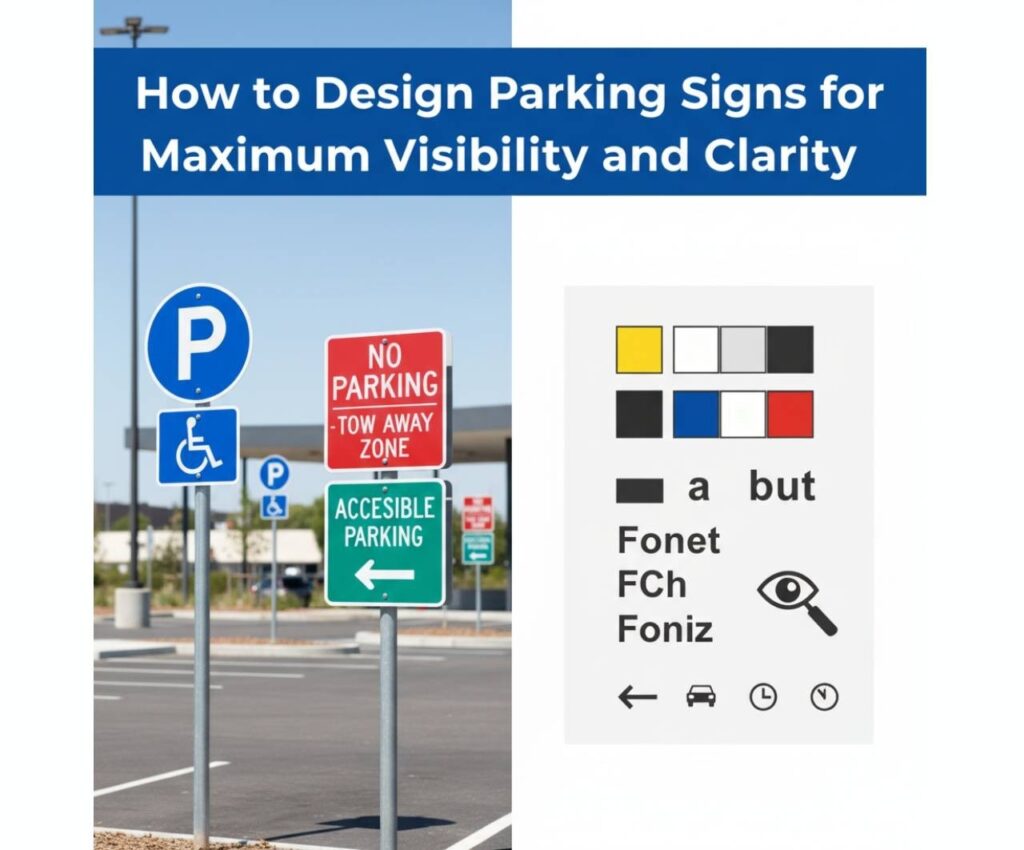
Legibility begins with font. Use clear, bold, sans-serif typefaces like Highway Gothic or Clearview. For street no parking signs, letters should be at least 6 inches high when placed on roadways with speeds over 35 mph. For road no parking signs in city settings, 3–4 inch letters often suffice if viewing distance is under 50 feet.
2. Color Contrast and Reflectivity
Contrast is critical. A white background with red or black text is the standard for a parking stop sign or road no parking signs because it maximizes readability. Reflective sheeting, such as engineer-grade or high-intensity prismatic, ensures signs remain visible at night or in low-light weather conditions.
OEMs now offer premium reflective materials that meet or exceed ASTM and MUTCD standards, providing wholesalers with top-tier products that reduce liability for their clients.
3. Pictograms and Icons
To enhance recognition, especially for multilingual environments, modern street no parking signs often incorporate universally recognized symbols like the slashed “P” or a red circle over a black car icon. Pairing text with icons reinforces the message and accelerates comprehension time, especially for unfamiliar drivers.
Placement Strategies for Maximum Impact
Correct placement is just as important as design. Even the most visible road no parking signs can go unnoticed if installed at improper heights or blocked by foliage or infrastructure.
Mounting Height
Standard mounting height is typically 7 feet from the ground to the bottom of the sign in pedestrian zones, and 5 feet in private areas like parking lots. For a parking stop sign placed at vehicle entrances, ensure clear line of sight from at least 150 feet away.
Angle and Facing
Signs should be angled perpendicular to approaching traffic. On curved roads, street no parking signs should face drivers head-on rather than following the curve. This ensures consistent visibility regardless of road geometry.
Spacing and Frequency
One road no parking sign every 100–200 feet is recommended in high-traffic areas. For long stretches, add repeat signs to reinforce the regulation and reduce ambiguity. Always position a parking stop sign at decision-making points like lot entrances, exits, or turning lanes.
Color Customization and Modern Trends
While red and white remain the standard for parking stop sign messages, there’s growing demand for customized colors to fit private properties, branded facilities, or special-use zones.
Private Zones
Gated communities and corporate campuses may use blue or green variants of road no parking signs for aesthetic harmony. However, these signs must still meet visibility standards, especially if enforcement is expected.
Events and Temporary Installations
Temporary street no parking signs for events often use yellow or fluorescent materials for high visibility. These signs can be made from lightweight aluminum or durable plastic, and many OEMs now offer bulk packages for short-term use.
Durability and Environmental Resistance
For wholesalers supplying to cities and large facilities, durability is a top priority. All parking stop sign, road no parking signs, and street no parking signs should be weather-resistant, rust-proof, and vandal-resistant.
- Material: High-gauge aluminum or composite materials
- Coating: Anti-UV and anti-fade laminate
- Hardware: Tamper-resistant bolts and reinforced mounting brackets
OEM options now include graffiti-resistant overlays that can be wiped clean without damaging the sign. Offering these features in your catalog can provide a significant edge when bidding for public contracts.
Customization for Wholesale and OEM Buyers
Customization has become essential for contractors and facility managers who want signs tailored to their property’s branding, local ordinances, or multilingual requirements.
At the OEM level, offering custom screen-printing or digital printing for road no parking signs and street no parking signs allows clients to add logos, special instructions, or even QR codes linked to parking apps.
Bulk orders of parking stop sign variants can also be optimized with options like pole kits, solar-powered lighting, or anti-theft fasteners—great upsells for wholesalers managing large accounts.
Smart Parking Signs and Digital Integration
In advanced urban settings, digital signage is gaining traction. LED-based road no parking signs can dynamically change messages based on time, traffic flow, or event schedules. While costlier, these are popular in city centers, airports, and sports arenas.
Smart street no parking signs connected to sensors or enforcement systems can help reduce violations and streamline citations. As a wholesaler, keeping some inventory of these digital-ready units can open doors to smart city contracts.
Real-World Examples of Successful Parking Sign Design
Commercial Lot in Downtown Los Angeles
To combat rising complaints of confusion, a commercial garage replaced faded signs with high-reflectivity parking stop sign panels featuring bilingual messaging. Violations dropped by 43% within one month.
Municipal No-Parking Zone in Toronto
The city deployed over 1,000 road no parking signs with enlarged pictograms and QR codes for digital feedback. Enforcement efficiency improved due to clearer instructions and citizen engagement.
Event Venue in Austin, Texas
For a week-long festival, event organizers used lightweight street no parking signs mounted on temporary A-frame barriers, color-coded for day-by-day access zones. These signs were branded and pre-sold in bulk by a wholesaler, leading to faster deployment and zero vehicle impoundments.
Tips for Buyers: What to Look for When Ordering
Whether you’re sourcing for a small facility or large municipal contract, be sure your parking stop sign, road no parking signs, and street no parking signs meet these criteria:
- Compliance with MUTCD and local regulations
- Certified reflective material (Engineer Grade, HIP, or Diamond Grade)
- Weatherproof durability
- Mounting compatibility (poles, walls, fences)
- Clarity of text and iconography
- Customization options for branding or messaging
- Bulk availability and rapid shipping
As a wholesaler or OEM, maintaining a well-organized catalog and educating clients on these aspects will not only boost sales—it will build long-term trust.
Final Thoughts: Clear Signage is Smart Safety
A clearly designed parking stop sign, well-placed road no parking signs, and strategically deployed street no parking signs do more than control cars—they improve traffic flow, protect pedestrians, and support compliance without confrontation. As urban environments become more complex and digitally integrated, signage must keep up—visually, structurally, and strategically.
For OEMs and wholesale distributors, staying ahead of trends in materials, messaging, and compliance is the key to meeting market needs and building sustainable client partnerships.