In any city or construction site, ensuring public safety starts with clear, readable, and long-lasting traffic signage. Whether you’re a traffic control signage supplier, a construction contractor, or part of a municipal planning team, the durability of your signs is critical—especially in harsh climates. Choosing the right materials, installation techniques, and compliance methods not only helps meet traffic signage standards, but also boosts cost-efficiency by reducing replacements.
At Trafficsigncustom, we understand the role that weather-resistant signage plays in long-term safety strategies. That’s why we’ve created this comprehensive guide to help you weatherproof your traffic signage and stay ahead of regulatory and environmental demands. Know more.
Why Weatherproofing Matters in the Traffic Industry
Traffic signage is constantly exposed to a combination of sun, rain, wind, snow, and vehicle emissions. Without proper protection, even high-quality signs can degrade quickly. Faded text, rusted edges, peeling reflective sheeting—these aren’t just signs of wear; they’re potential safety hazards that violate traffic signage standards.
A professional traffic control signage supplier knows the importance of using weatherproofing techniques that extend the life of signage and maintain compliance. The benefits go beyond safety—they also include:
- Lower long-term maintenance costs
- Stronger brand reliability for municipalities and contractors
- Increased visibility in both day and night conditions
- Fewer liability risks in work zones and public spaces
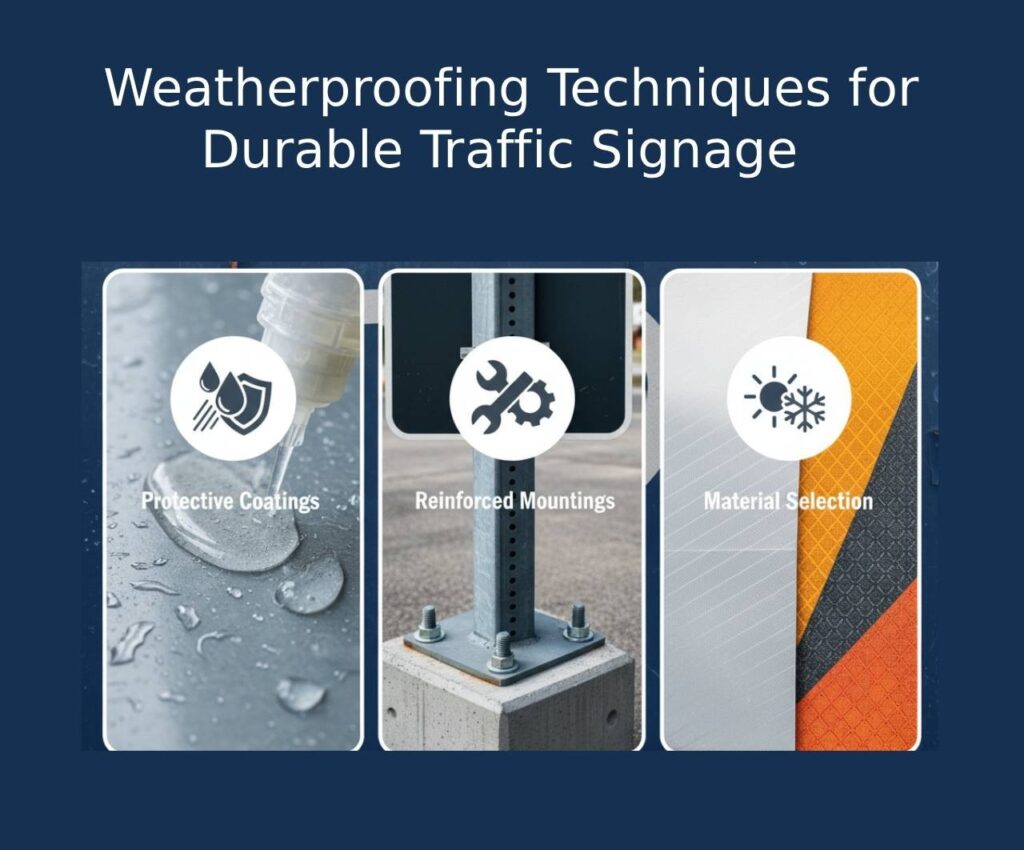
Material Selection: The First Layer of Defense
Weatherproofing starts with selecting the right materials. For any traffic signage, material quality determines resistance to UV radiation, corrosion, moisture, and physical impact. At Trafficsigncustom, we recommend:
- Aluminum substrates: Lightweight, rust-proof, and resistant to extreme temperatures
- High-density polyethylene (HDPE): Ideal for flexible or temporary signage, especially in construction zones
- Engineer-grade or diamond-grade reflective sheeting: Maintains visibility at night and under poor weather conditions
- Anti-graffiti coatings: Protect surfaces from vandalism and make cleaning easier
Choosing materials aligned with traffic signage standards ensures that your signage will meet local and federal regulations for reflectivity, legibility, and durability.
Protective Coatings & Finishes
Protective finishes can significantly improve a sign’s ability to withstand the elements. For example, UV-resistant coatings help prevent fading in high-sun areas, while powder-coating metal signs adds corrosion resistance. These surface treatments are especially important for traffic control signage suppliers working in coastal or high-altitude regions where signs are constantly under environmental stress.
A multilayer approach—reflective sheeting over treated metal or HDPE, sealed with a UV-stable laminate—can extend signage life by 7–10 years, even in demanding conditions.
Mounting & Installation: Don’t Underrate It
Even the best materials can fail if improperly installed. To meet traffic signage standards, mounting techniques must ensure the sign is both secure and positioned correctly for visibility. Improper angles, weak fasteners, or poor pole placement can cause signs to warp, fall, or become misaligned with the driver’s line of sight.
Key best practices include:
- Using galvanized or powder-coated steel posts
- Installing anti-theft and anti-vibration fasteners
- Burying posts deep enough to withstand high winds
- Avoiding direct exposure to sprinkler systems or road splash-back zones
Trafficsigncustom works with engineers and city planners to provide customized mounting hardware that meets regional wind load and visibility codes.
Sealing Edges & Water Resistance
A common failure point in traffic signage is moisture intrusion at the edges. Over time, water seepage can degrade adhesives, cause bubbling in reflective layers, and lead to mold growth. Edge sealing with durable silicone or butyl rubber tape prevents this.
Traffic control signage suppliers must also ensure that any bolt or rivet holes are sealed post-installation. Water entering through fastener holes can slowly corrode the sign substrate from within.
For areas with high humidity or frequent rain, signs may benefit from back-mounted drainage slots or breathable membranes to allow moisture escape without letting water in.
Reflectivity in All Weather Conditions
In poor weather—fog, snow, heavy rain—visibility is key. Meeting traffic signage standards means selecting materials and layouts that maintain readability no matter the time of day or weather condition.
High-reflectivity materials like 3M™ Diamond Grade™ sheeting or Prismatic sheeting technologies allow headlights to “bounce” back off the sign at wider angles. These materials help drivers identify signage earlier and make safer decisions.
At Trafficsigncustom, we carry a wide range of high-performance reflectivity options suitable for school zones, intersections, highways, and construction areas—each tested to withstand environmental wear and meet both national and international compliance benchmarks.
Climate-Specific Considerations
Every region presents different weatherproofing challenges, and a top-tier traffic control signage supplier must offer solutions tailored to the climate:
- Coastal regions: Use marine-grade aluminum, anti-salt coatings, and corrosion-resistant fasteners
- Desert climates: UV-stable inks and coatings with high solar reflectivity to prevent heat warping
- Cold zones: Flexible substrates that resist cracking from freeze/thaw cycles
- Rainy zones: Fully sealed edges, rust-proof brackets, and vertical installation angles to reduce water pooling
Our team at Trafficsigncustom works with clients across North America to deliver signage built for their unique environment—because no two climates are the same, and neither should your signage plan be.
Staying Compliant with Changing Regulations
Traffic signage standards evolve. Updates in visibility requirements, language, symbols, and smart city integrations are becoming more frequent as cities adopt technology and expand infrastructure.
This is where working with an experienced traffic control signage supplier is invaluable. Trafficsigncustom stays ahead of regulatory shifts by:
- Regularly reviewing MUTCD, FHWA, and local DOT updates
- Offering compliance audits and consultation
- Providing signage ready for future tech integrations like RFID, solar lighting, or QR-scannable codes
Our goal is to ensure that your traffic signage investment is future-proof—not just weatherproof.
Smart Tech Meets Durability
Incorporating smart technology into signage doesn’t mean sacrificing durability. Weatherproof smart signs now include solar-powered flashing LEDs, Bluetooth-enabled status updates, and temperature-activated warning systems.
We design these with the same rigorous weatherproofing standards as traditional traffic signage—ensuring they function reliably year-round.
Smart additions allow construction crews and city departments to monitor signage status remotely, reducing the need for constant manual checks.
Tips for Maintenance and Longevity
To extend the life of your traffic signage, consider implementing a maintenance schedule that includes:
- Semi-annual cleaning with non-corrosive solutions
- Inspection of mounting points and edge seals
- Monitoring reflectivity using standardized visibility meters
- Reapplying anti-graffiti coatings as needed
- Logging signage age and environmental exposure
Regular maintenance not only reduces replacement costs but also ensures ongoing compliance with traffic signage standards—something every reliable traffic control signage supplier should support.
Final Thoughts
Weatherproofing isn’t just a best practice—it’s a necessity in today’s demanding traffic environments. With extreme weather events becoming more frequent, having signage that can withstand years of abuse while maintaining compliance is critical to your company’s safety infrastructure.
At Trafficsigncustom, we go beyond just being a traffic control signage supplier. We’re a partner committed to helping you design, implement, and maintain a signage strategy that meets the highest traffic signage standards, resists the toughest conditions, and delivers long-term value.
Ready to upgrade your traffic signage with proven weatherproofing techniques? Let’s build safer roads together.